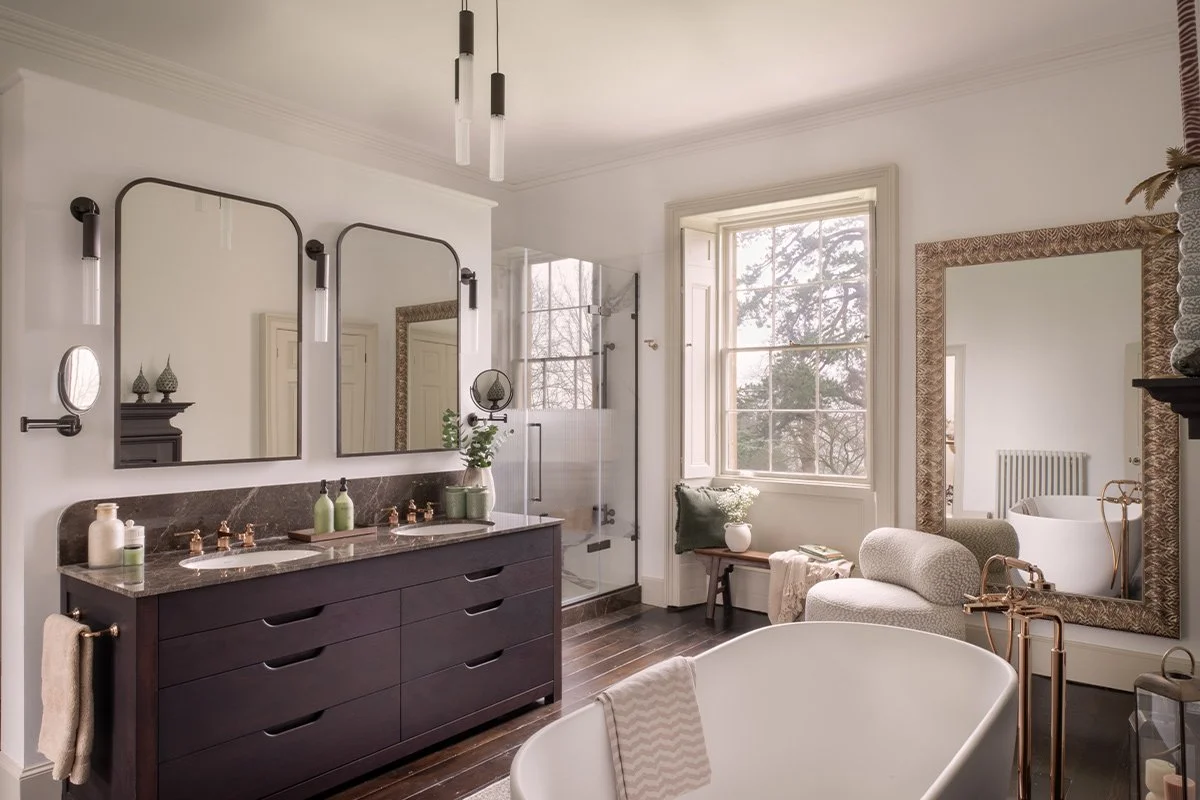
Master Ensuite in a Georgian Manor
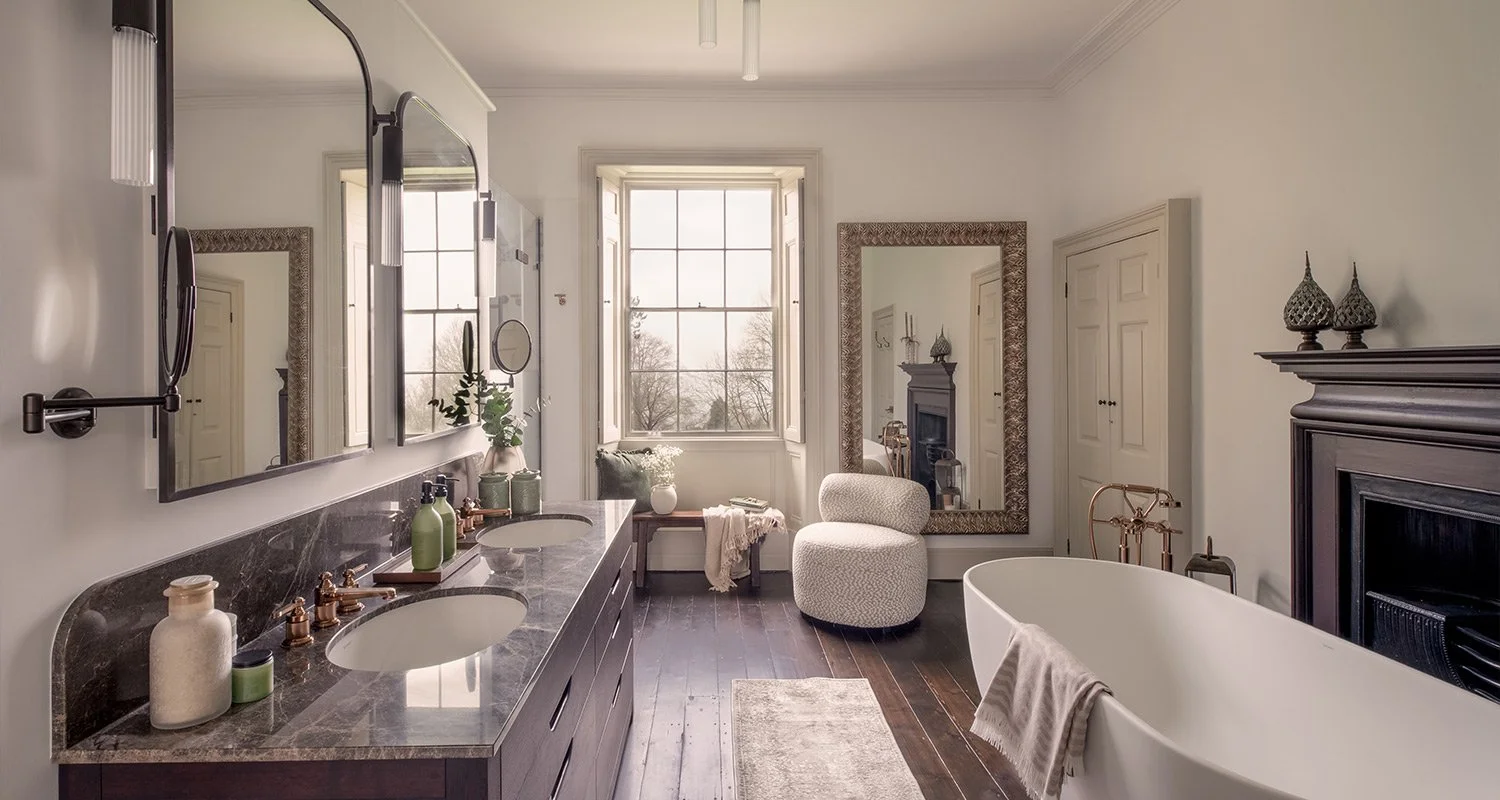
Set within a listed Georgian property in Somerset, the master ensuite presented both an opportunity and a challenge. While exceptionally large, the room was poorly organised, with all elements pushed to the perimeter and the centre left unused. The toilet was fully exposed, and the overall experience lacked structure and intent.
The brief focused on retaining key features, including double basins, a bath, and a generous shower, while transforming how the room functioned and felt. Key architectural elements such as the fireplace, timber flooring, and dual doorways needed to be preserved.
BEFORE & DURING
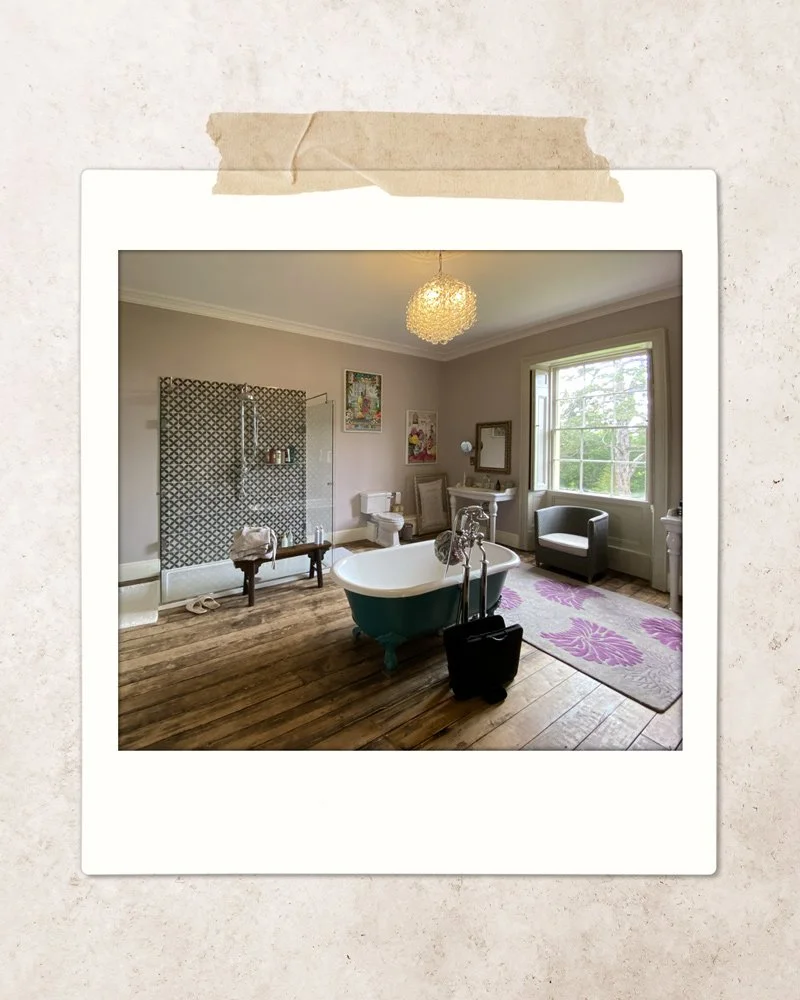
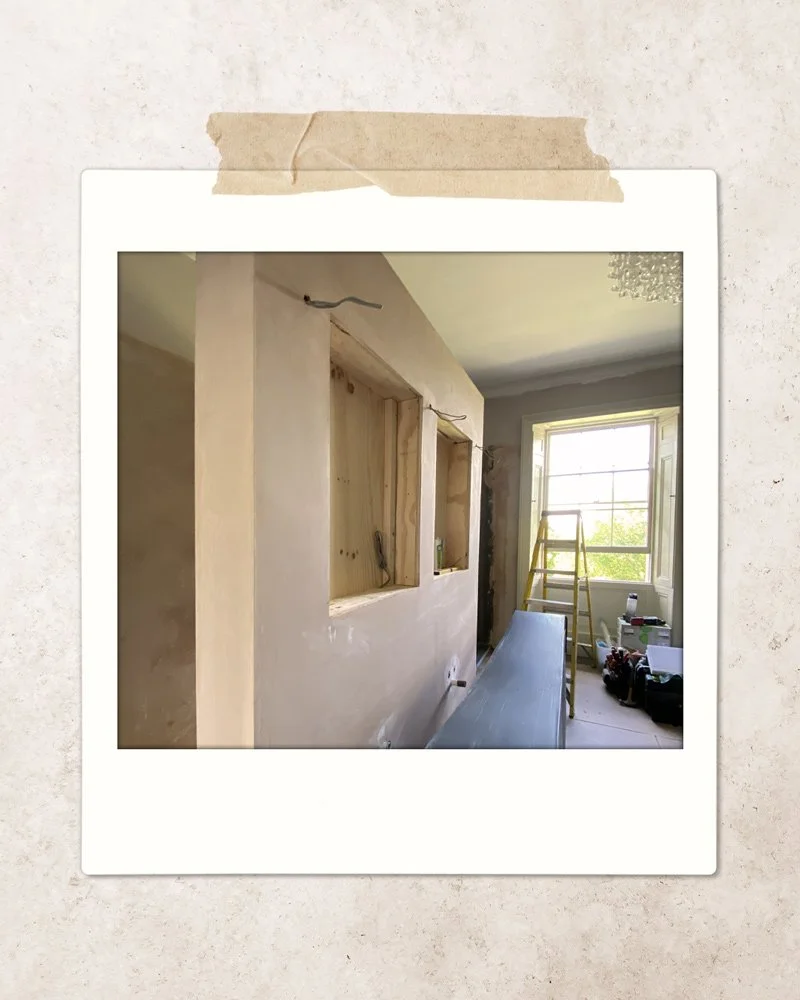
Rather than reinforcing the perimeter arrangement, the design brings the room inward. A central partition wall repositions the basins and introduces structure, breaking the space into distinct zones. This allows the room to unfold gradually, creating a more considered and intuitive flow.
Working within a listed building required a sensitive approach. Existing joists and the original timber floor were carefully retained and reinforced where needed.
To avoid cutting into the structure, the shower was resolved with a marble threshold and step detail. This manages drainage while also defining the shower area and protecting the existing floor.
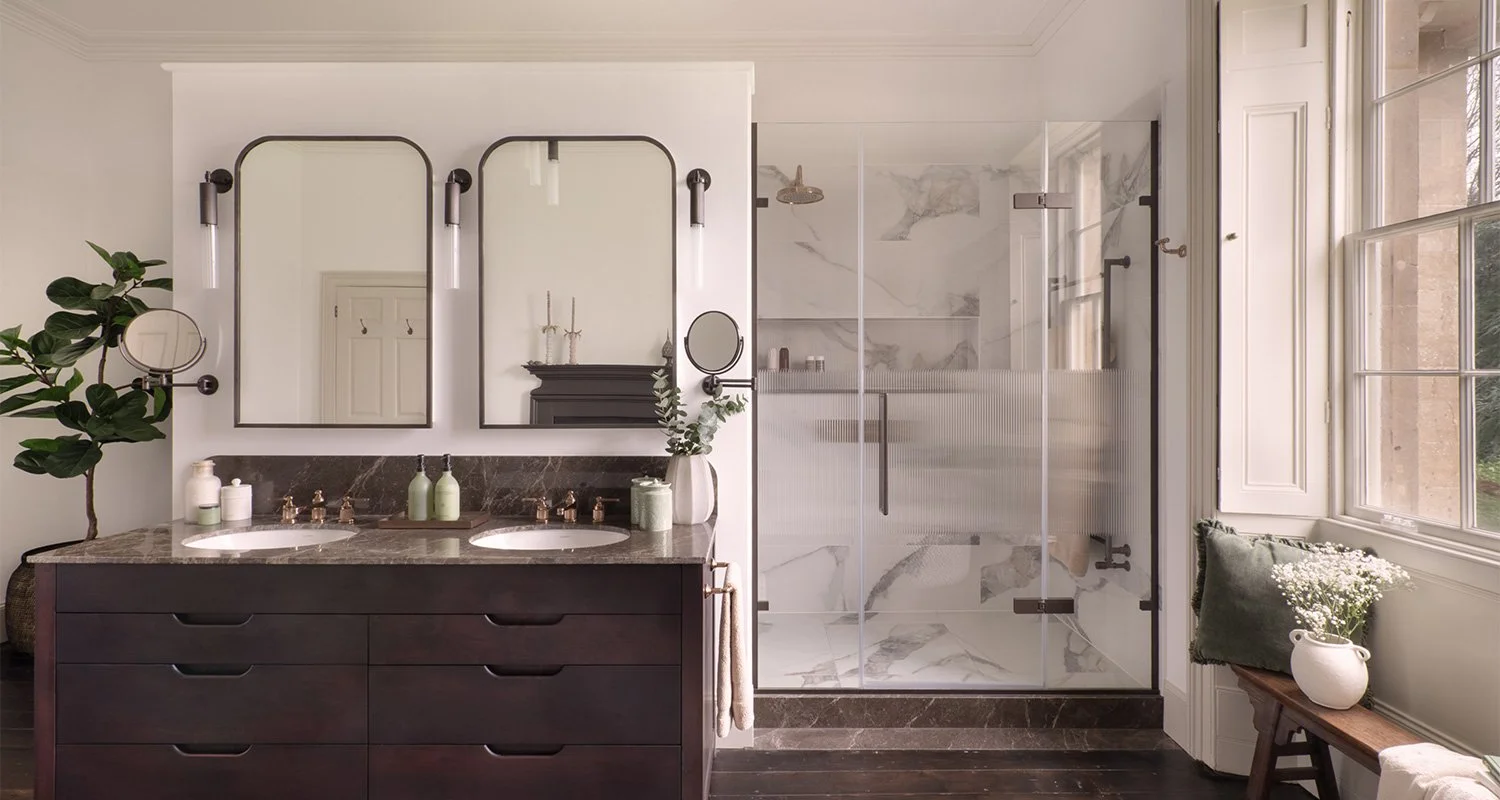
The shower enclosure combines practicality with refinement. A hand-crafted fluted glass screen provides privacy without enclosing the space and is positioned to suit the client’s sightlines.
A fully bespoke vanity forms the centrepiece of the room. Storage was tailored precisely to the client, down to the height of individual drawers.
Marble was selected in person and carefully mapped across the vanity, shower seat, shelving, and threshold to ensure continuity throughout. Mirror-fronted cabinets integrate additional storage and shaver sockets while maintaining a clean and uncluttered appearance.
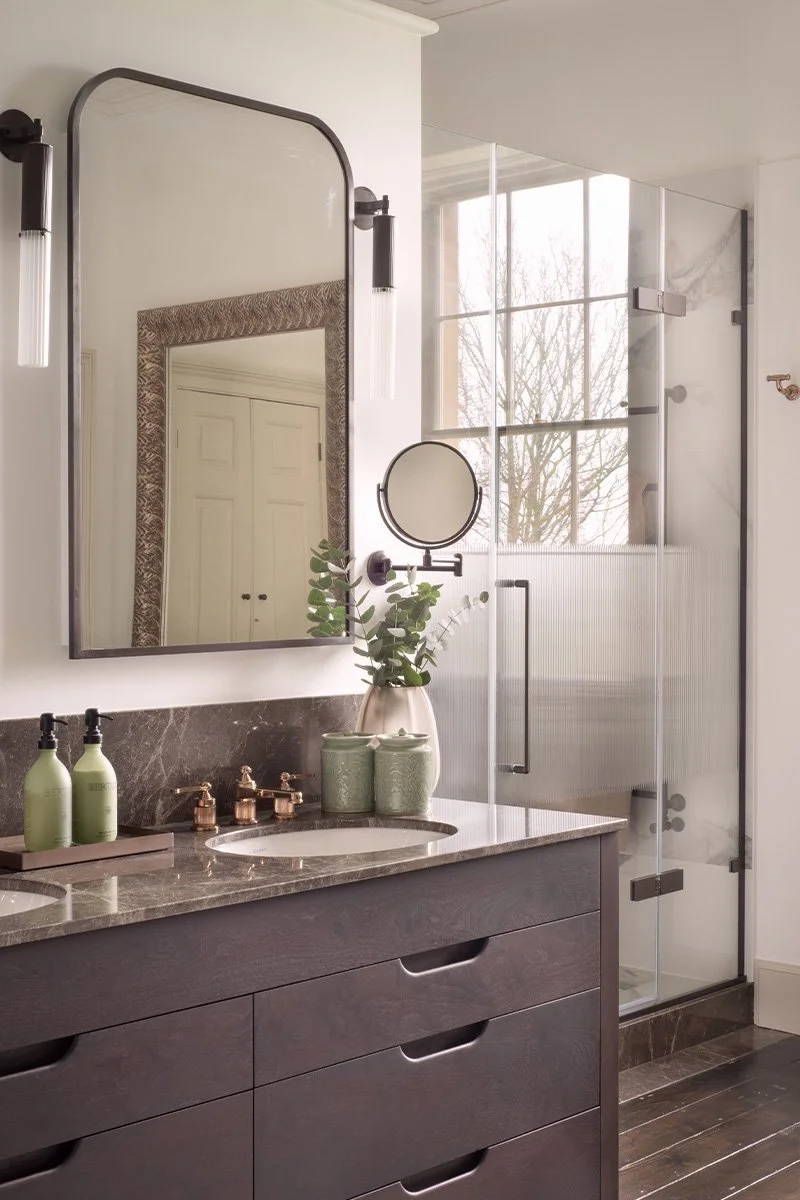
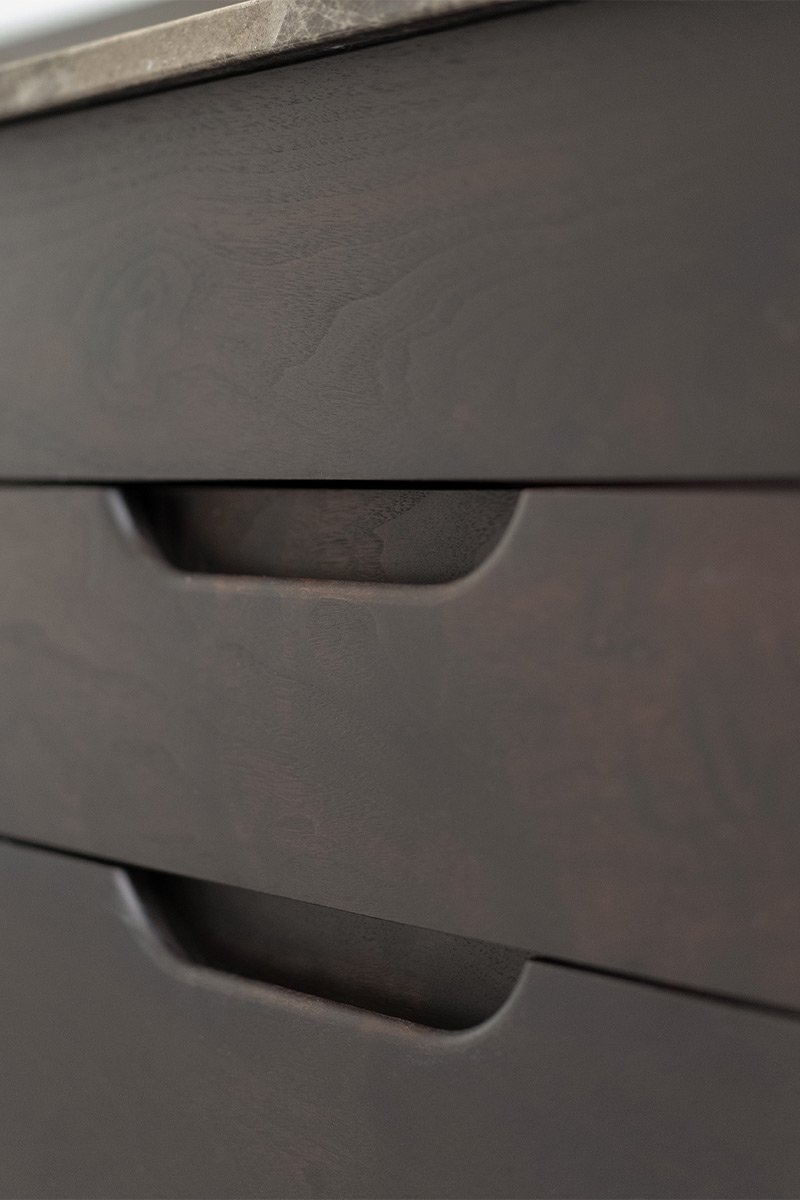
A restrained palette allows material and texture to take precedence. Fluted glass, softly veined marble, and warm bronze brassware introduce depth without excess.
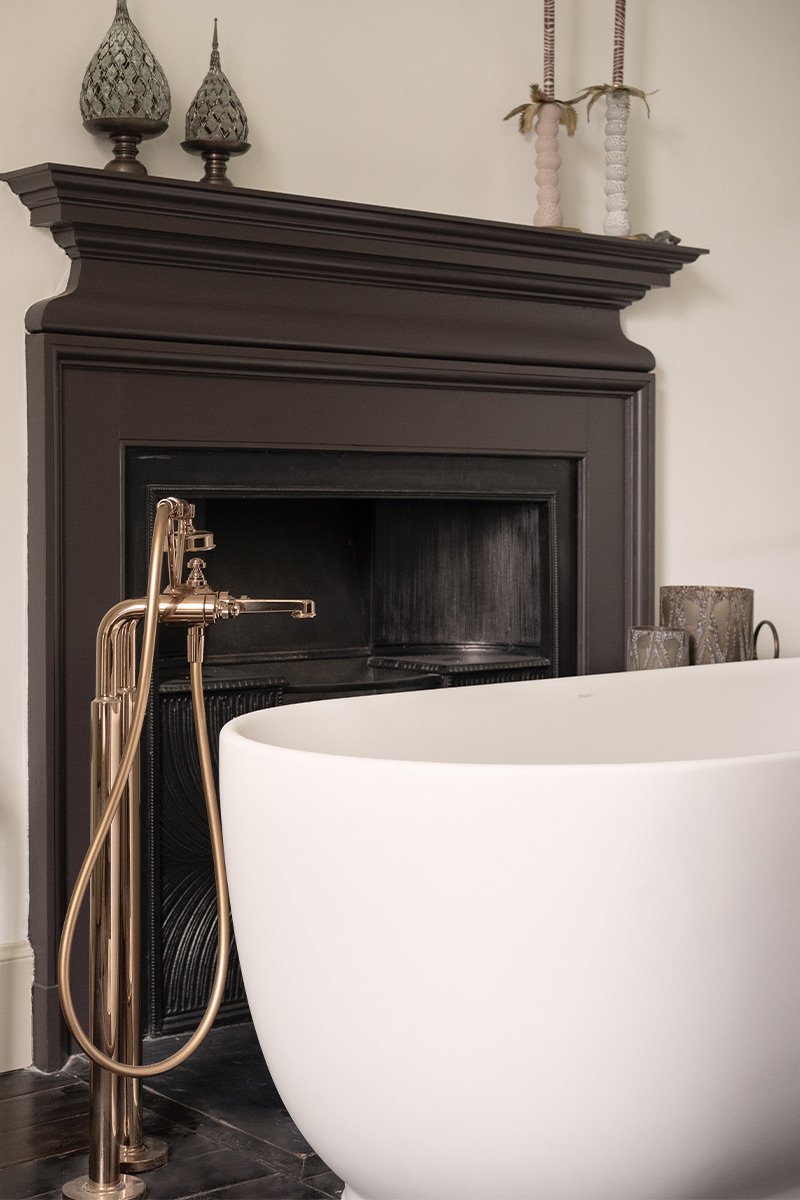
Matte finishes on the bath and WC provide a softer alternative to traditional gloss and contribute to a more refined overall feel.
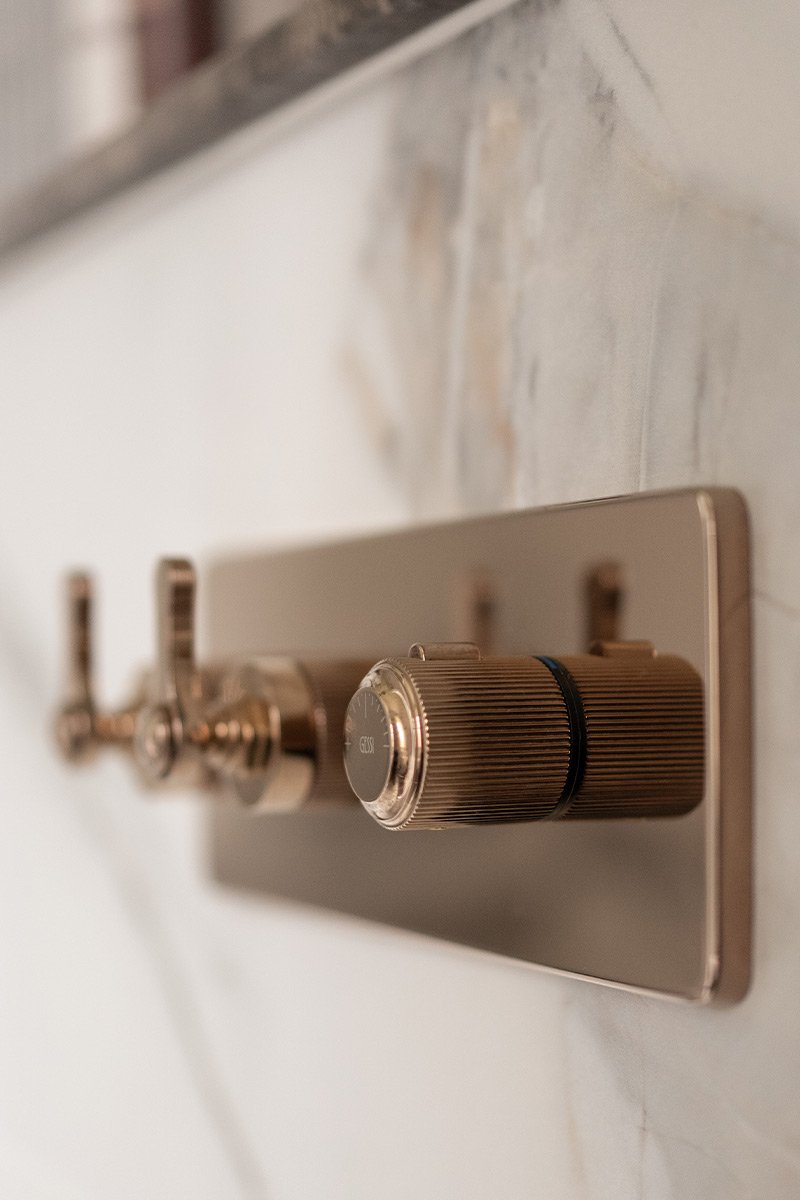
Lighting presented a challenge as ceiling intervention was limited. The solution was to integrate lighting into the joinery. Concealed LED strips within the partition wall provide uplighting, which reflects off the ceiling to create a soft ambient glow.
This is complemented by pendant lighting and illuminated alcoves to ensure the space is both functional and atmospheric.
The original fireplace, previously hidden, was restored and reinstated. A new tulipwood section replaces a damaged element, allowing the feature to sit comfortably within the redesigned space while preserving its historic integrity.
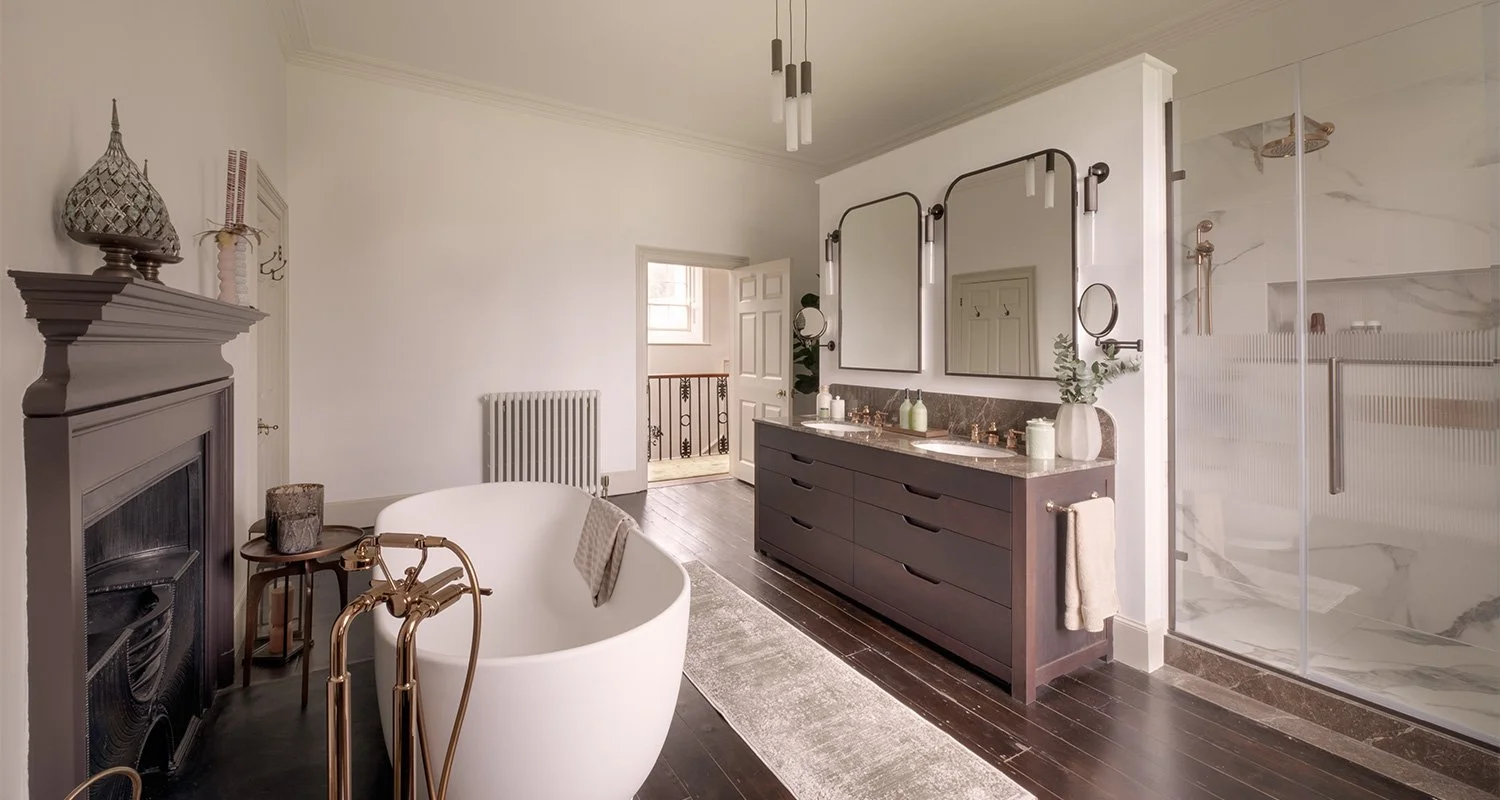
The completed ensuite is a significant transformation. What was once an oversized and underused room is now a considered and cohesive space, where movement, material, and proportion have been carefully resolved. It balances the constraints of a listed building with the expectations of modern living, resulting in a bathroom that feels both functional and refined.
Download our Free ‘How to Plan a LUXURY BATHROOM Guide’
If you are thinking about a new bathroom renovation, it is always advisable to have a conversation with an expert. Their knowledge, expertise and experience can open up new possibilities whilst potentially saving you money, stress and time.
To help you get started, we have put together this guide to help you think about what you want from the new space. This document highlights some of the obstacles you may encounter and the questions you may like to ask designers when you venture out into the world of bathroom design showrooms.