Designing for the Buyer You Haven't Met Yet
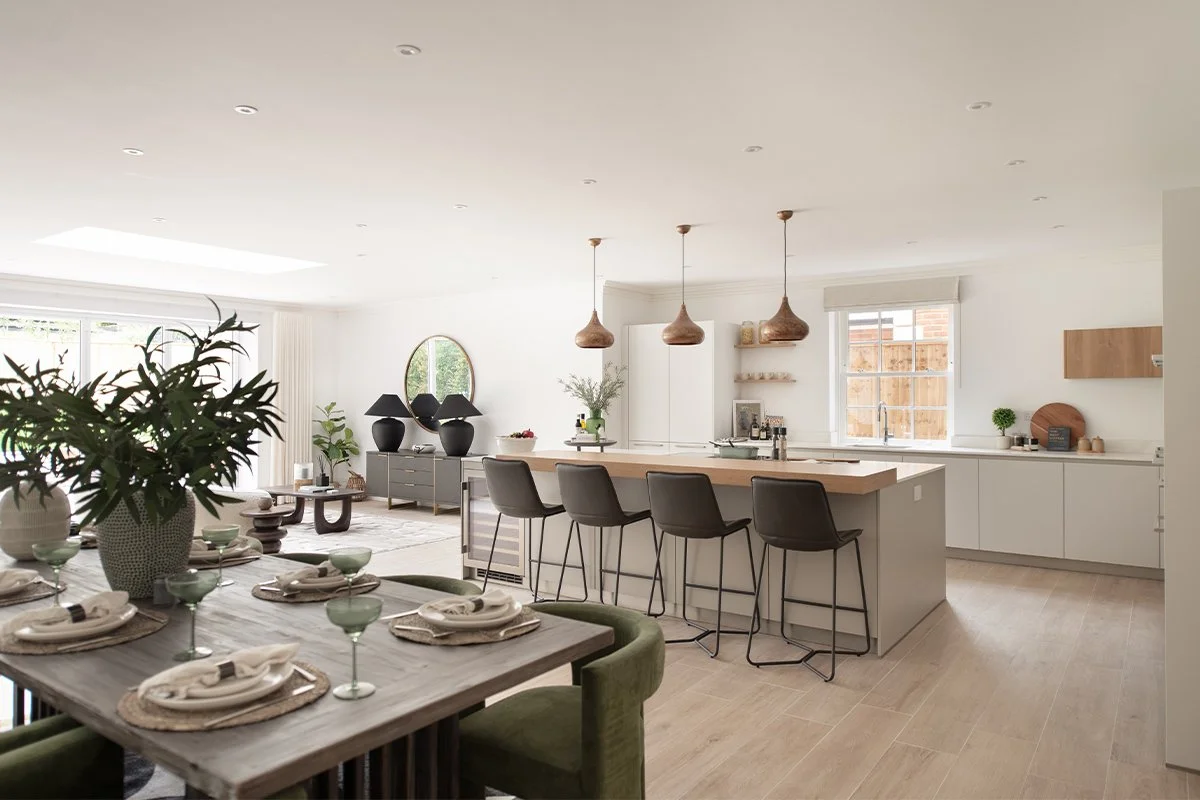
How do you create desire before you know the buyer?
One of the more interesting challenges in residential development is designing for someone who doesn't yet exist in the process.
Unlike a private client project, there are no personal preferences to accommodate, no Pinterest boards to interpret, and no lifestyle habits to design around. Yet the property still needs to connect emotionally, command a premium position in the market, and justify its value from the moment a prospective buyer walks through the door.
Recently, we collaborated with Millgate (Winchester) Limited on a premium luxury new-build property in Winchester. The brief was clear: create a kitchen that would elevate the home's appeal, enhance its market positioning, and resonate with a future homeowner we had never met.
The result was a lesson in premium positioning, design restraint, buyer psychology, and the subtle art of perceived value.
“Ultimately, however, the most important factor is passion. Business owners need to be committed to delivering the very best new home every time.”
Premium Positioning
For many prospective buyers, the kitchen is where first impressions are formed.
It is often the most photographed room in a property, the focal point of marketing materials, and the space most likely to create a memorable emotional response during a viewing.
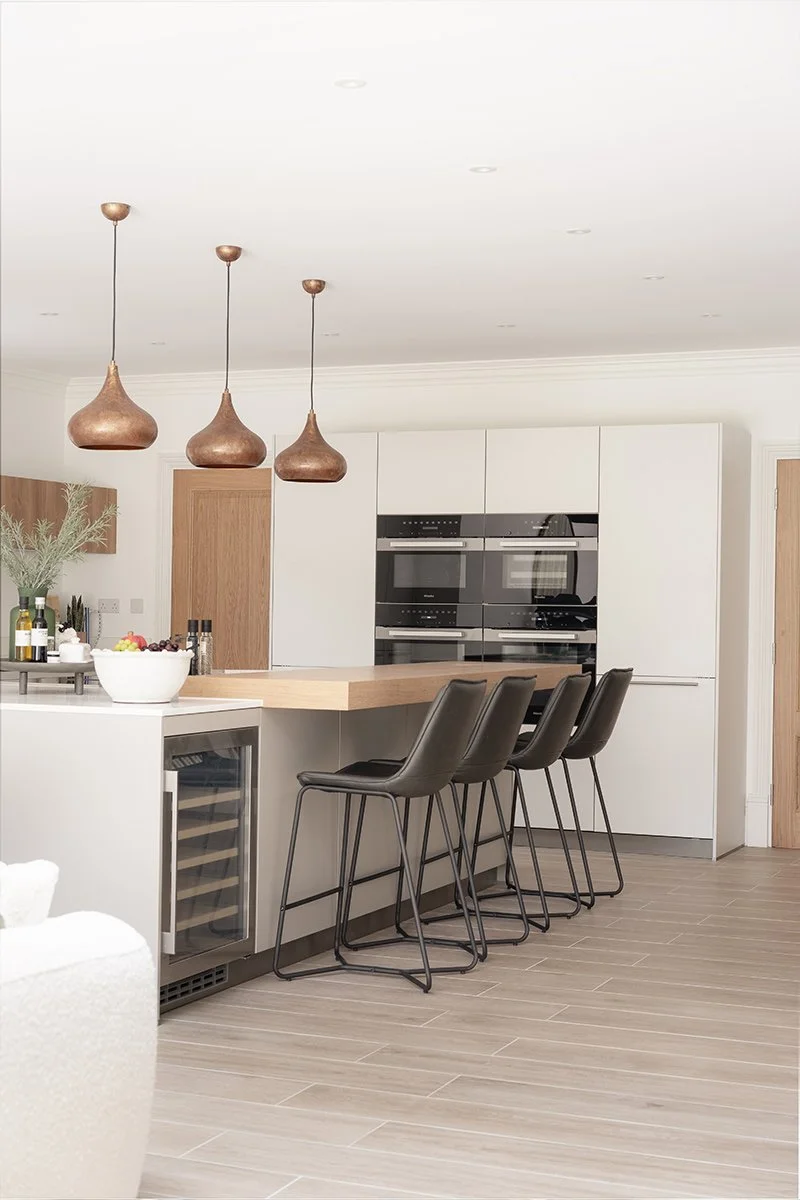
This kitchen needed to feel visually impressive while remaining timeless. Material choices were layered carefully to create interest and depth without overwhelming the architecture of the home.
A bank of ovens, an induction hob with integrated extraction, and a boiling water tap all communicate capability and convenience. More importantly, they signal quality. Buyers may not always understand the technical specifications, but they instinctively recognise when a space feels premium.
In development projects, perception often begins long before functionality is tested.
Design Restraint
Designing for a broad audience requires discipline.
The temptation can be to introduce bold statements or highly personalised features in an attempt to create distinction. Yet when the eventual buyer is unknown, restraint often becomes the most powerful design tool.
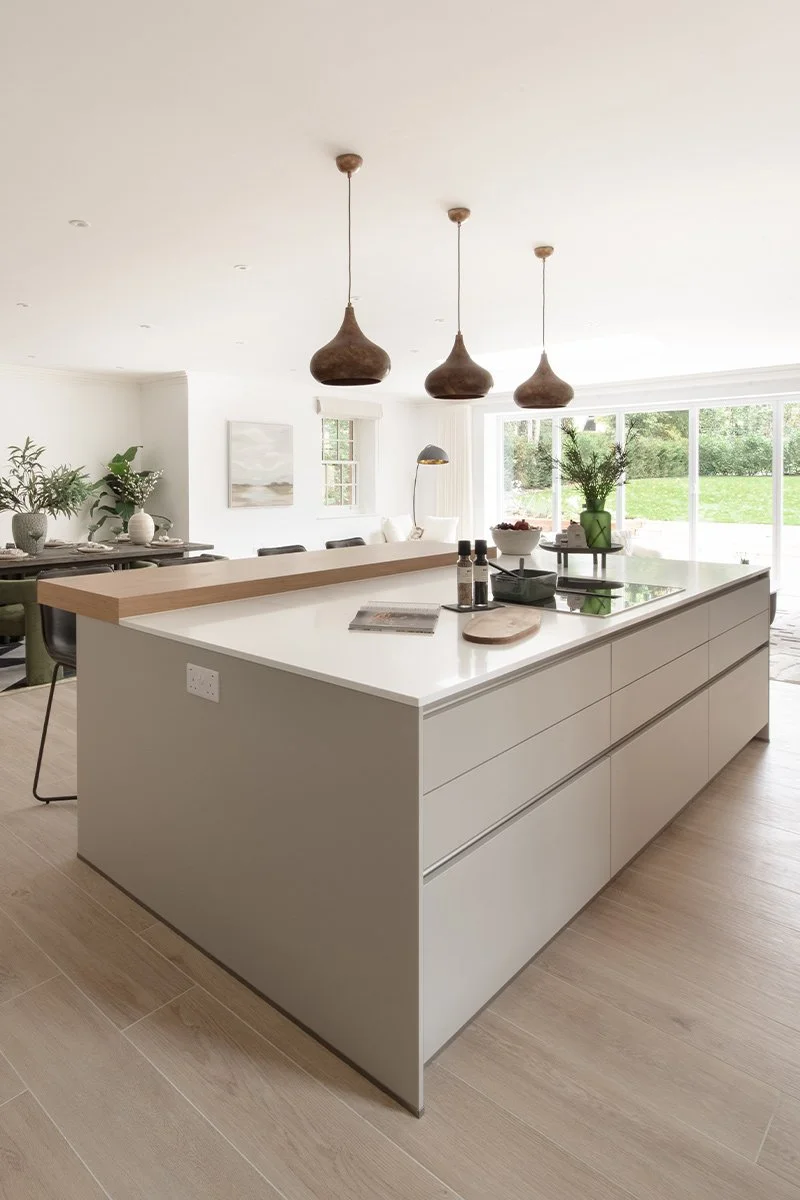
The palette for this project centred around soft grey cabinetry, subtle oak-effect accents, and polished quartz worktops. The result is calm, contemporary and intentionally composed.
Nothing feels overly personal. Nothing risks dividing opinion.
Worktop heights remain standard. Storage solutions are generous but not specialised. Every decision was filtered through a simple question:
Will this broaden appeal or narrow it?
The objective was not to create a kitchen for one person, but to create a space in which many people could imagine themselves.
Buyer Psychology
Understanding the expectations of the target buyer is as important as understanding the architecture itself.
For a property marketed to high-net-worth indi, certain features move beyond luxury and become expected.
A wine cooler, for example, may feel unnecessary in some developments. In this context, it becomes part of the language of the property and contributes to the lifestyle narrative buyers expect to see.
Conversely, some highly functional upgrades remain largely invisible during a viewing. Internal pull-out storage systems throughout every cabinet may improve usability, but they do little to influence a buyer's first impression.
This is where careful cost engineering becomes essential.
The challenge is not simply spending more. It is investing where buyers will recognise value and creating the strongest commercial outcome for the development.
Perceived Value
Perceived value is often built from a series of small decisions rather than one dramatic gesture.
Recognisable appliance brands. Thoughtfully selected materials. Consistent detailing. Excellent installation.
Together, these elements create confidence.
The island became the defining feature of the space, positioned to support both everyday family life and entertaining. Storage was maximised without compromising the clean visual language of the design, while multiple ovens introduced genuine flexibility for future homeowners.
The result is a kitchen that feels both aspirational and approachable — refined enough to support the property's premium positioning while remaining adaptable to a wide range of lifestyles.
Designing for an unknown buyer is rarely about predicting taste.
More often, it is about understanding expectations, creating an emotional connection, and delivering quality in ways that people instinctively recognise.
Partner Voice | In There Words
Rob Carter, Millgate (Winchester) Limited
When specifying a premium home, what separates features that genuinely add value from those that simply add cost?
"Location remains the most important factor. For our buyers, the focus is primarily on Winchester and secondarily on the city's premier locations. Our buyers are often moving from older properties that require ongoing maintenance. They want a new home that is warm, efficient, easy to operate and requires minimal upkeep.
Complicated home automation systems are rarely a priority. What matters more is a well-thought-out space with high-quality material finishes and attention to detail throughout."
How do you create a home with broad appeal without it feeling generic?
"Every site has its own characteristics that influence how the homes are positioned and experienced. We always seek to create a strong connection between the house and the garden, often through generous patio spaces.
While every development is unique, all of our homes share a common feeling of calm, space and ease."
Looking back at completed developments, what design decisions consistently have the biggest impact on buyers' perception of quality?
"Quality comes from using the best products and ensuring they are installed exceptionally well. That standard must extend throughout the property and the surrounding grounds, supported by strong project management.
Ultimately, however, the most important factor is passion. Business owners need to be committed to delivering the very best new home every time. That expectation must be repeated consistently and reinforced on every visit to site."