

Article
Kitchens
article
Is broken-plan the new open-plan?
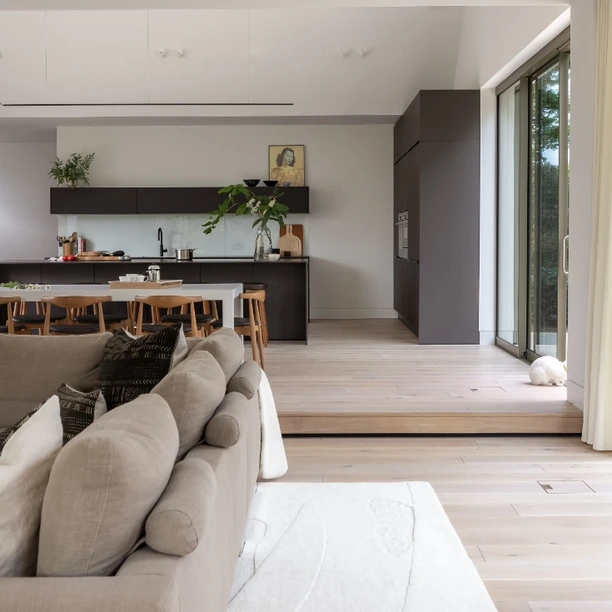
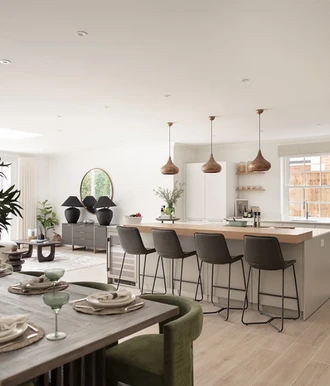
Open-plan living changed the way we use our homes, bringing cooking, dining and living together. But when one room is expected to accommodate everything from breakfast and homework to entertaining and working from home, complete openness can have its drawbacks.
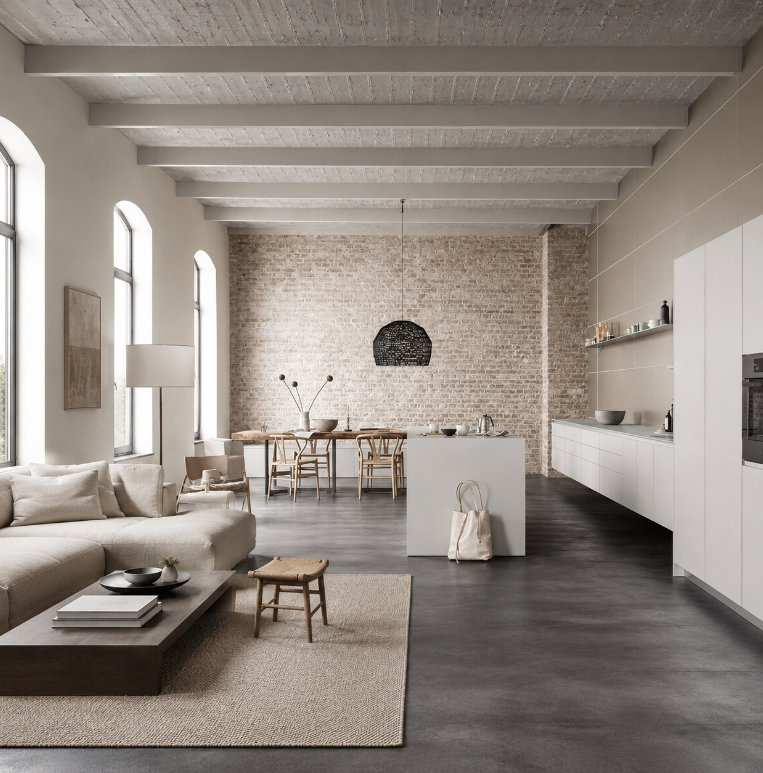
Broken-plan takes a more measured approach: retaining light, connection and generous sightlines while giving different parts of the home a clearer purpose.
When one room has too many jobs
Open-plan works particularly well when everyone is doing roughly the same thing. It becomes more complicated when different activities happen at once.
Someone might be preparing dinner while another person works at the dining table. The dishwasher is running, the television is on and somebody wants a quieter place to sit.
These are ordinary parts of daily life, but without any separation they begin to compete. As kitchens have become part of our main living spaces, the challenge is no longer simply how to open rooms up, but how to make several different uses sit comfortably alongside one another.
The question is no longer simply how open a room can be, but how well that openness works.
Richard Carter, Director Hobson’s Choice
Not necessarily more walls
Despite the name, broken-plan doesn’t mean returning to a series of enclosed rooms.
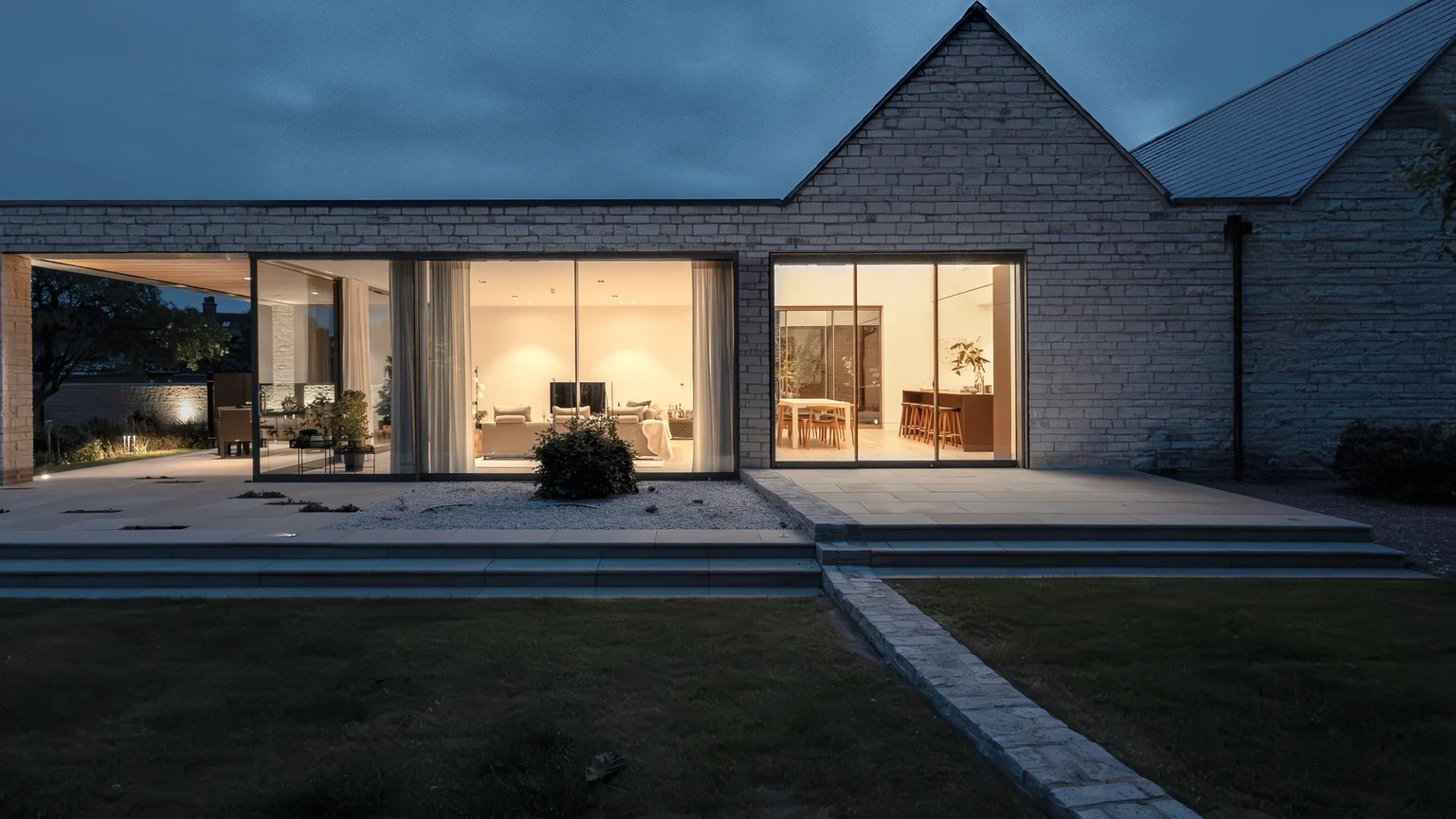
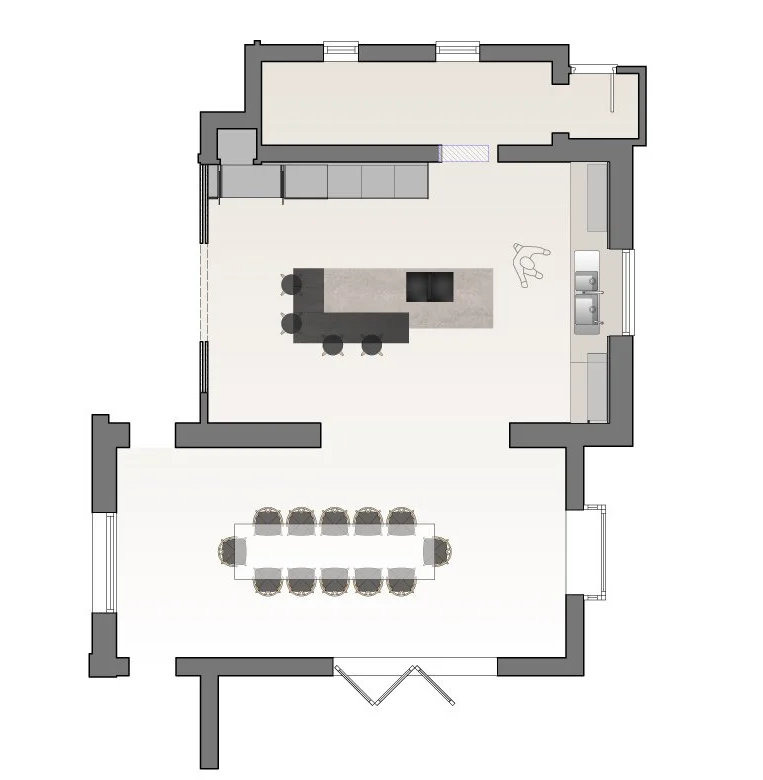
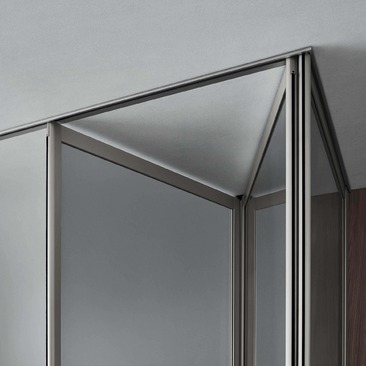
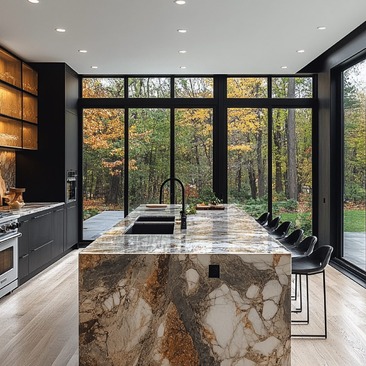
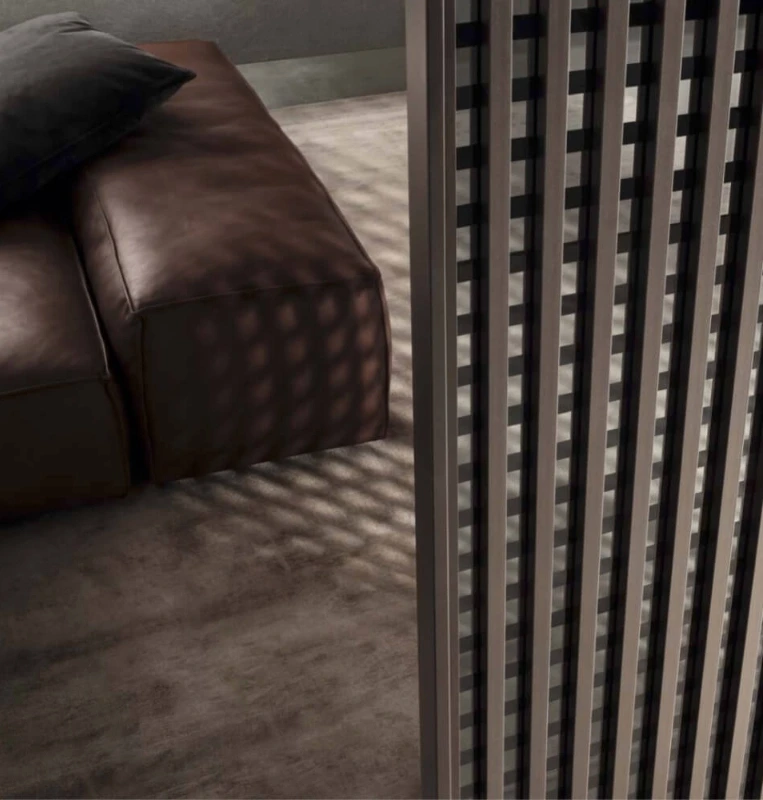
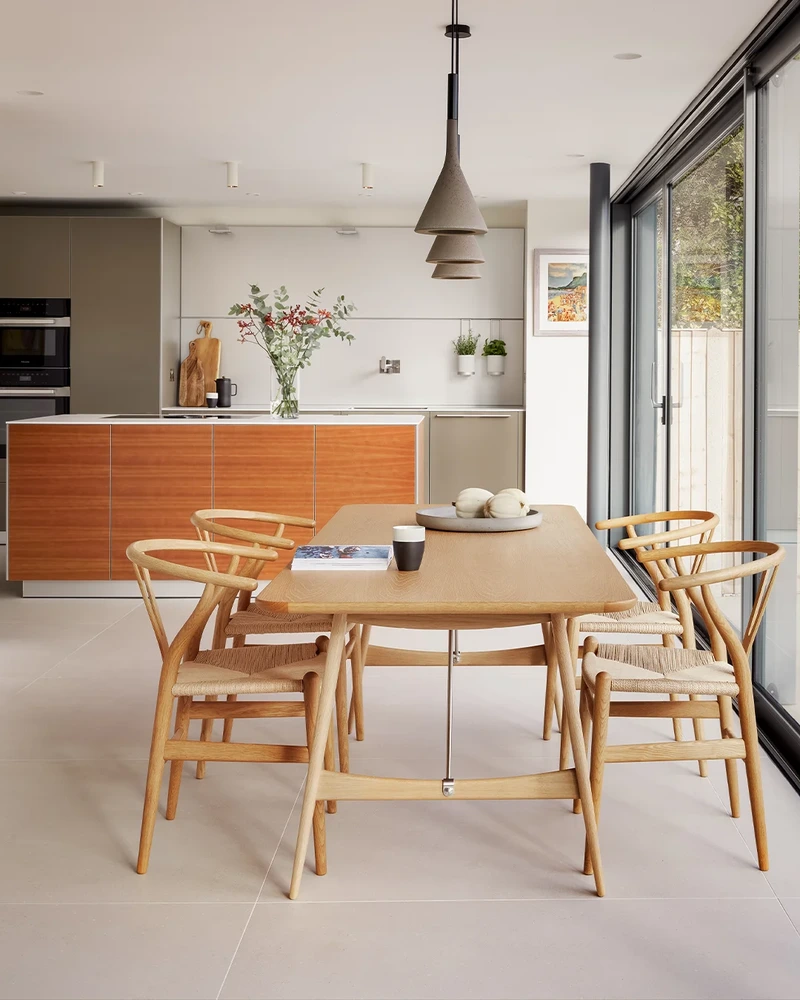
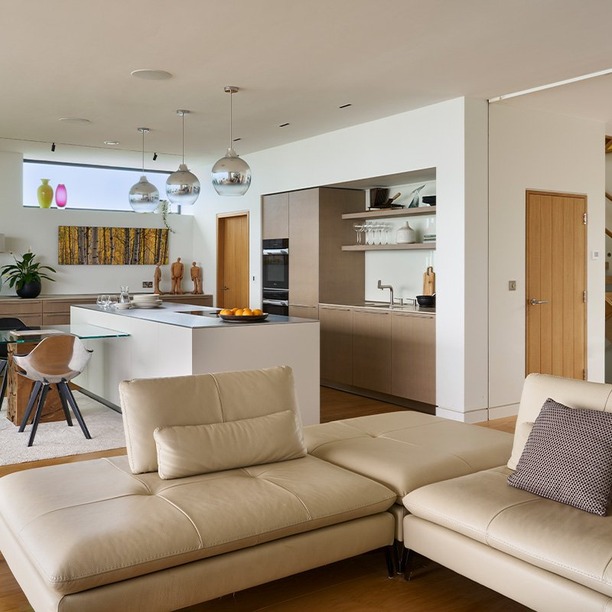
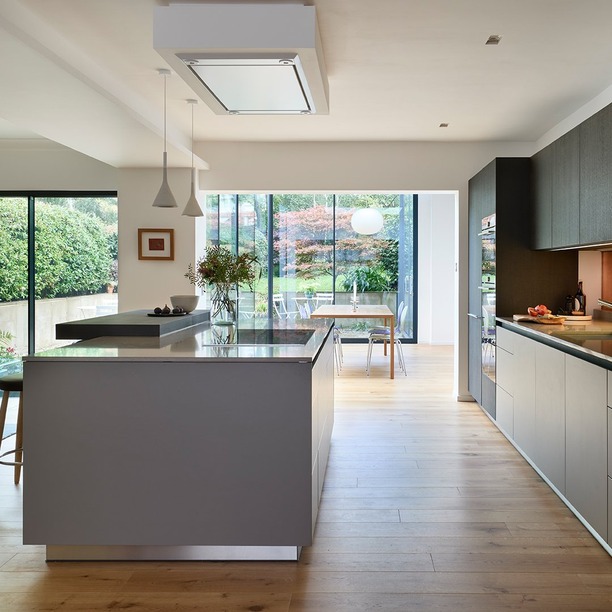
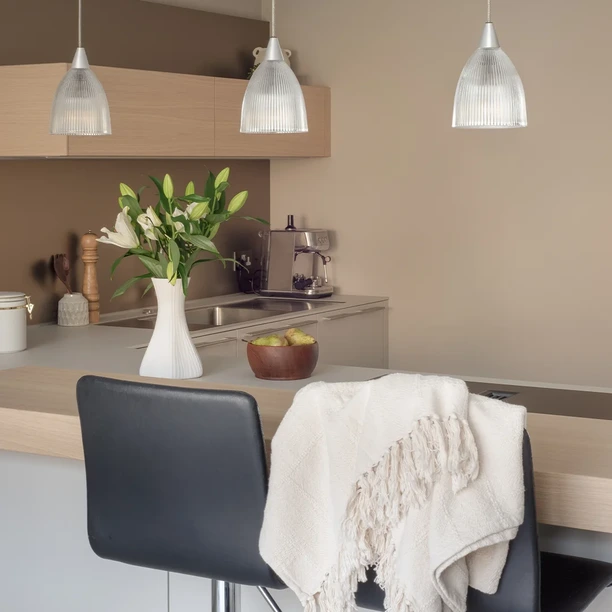
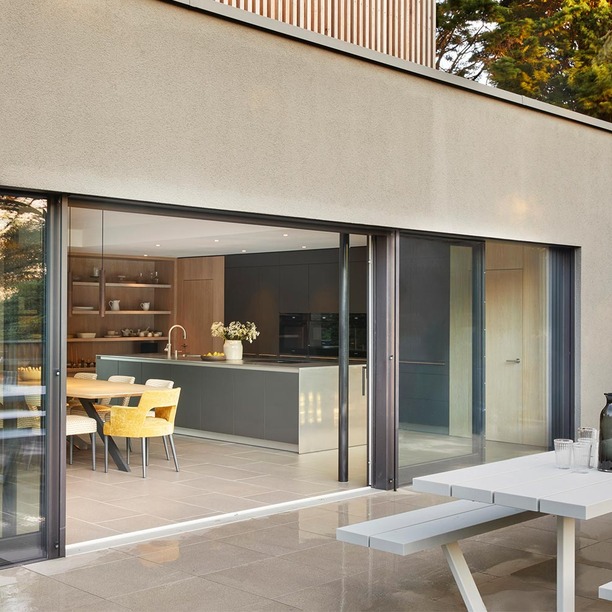
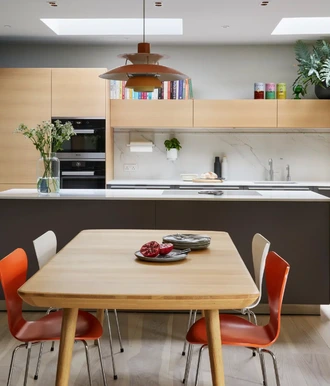
Separation can be quite subtle. A peninsula might establish the edge of the kitchen. Glazing can contain sound and cooking smells without sacrificing light. Pocket doors can disappear when the spaces need to work together and close when they don’t.
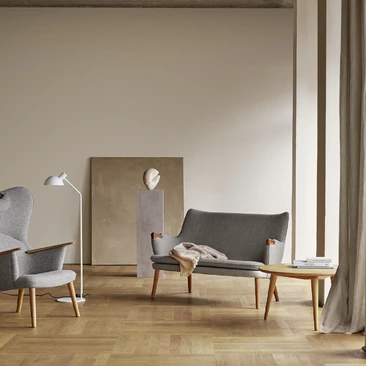
Even a change in flooring, ceiling height, lighting or cabinetry can give one area its own identity.
We recommend:
Glazing
Maintains views and borrowed light while giving rooms some acoustic separation.
Sliding or pocket doors
Allow the relationship between rooms to change throughout the day.
Furniture and cabinetry
Islands, peninsulas, shelving and banquettes can create boundaries without walls.
Materials and levels
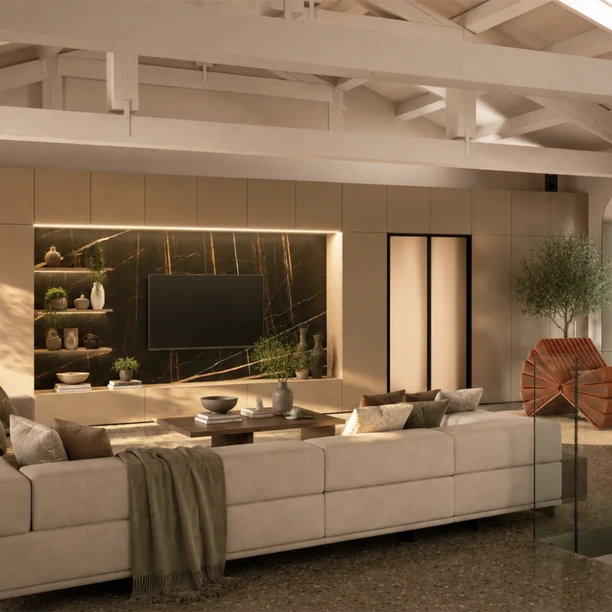
Flooring, lighting and changes in height can subtly signal that one space has become another.
What belongs on show?
Kitchens are working rooms. However carefully designed they are, there will be pans beside the hob, ingredients on the worktop and appliances that are used every morning.
When the kitchen shares a space with the sitting or dining room, those practical details become part of those rooms too.
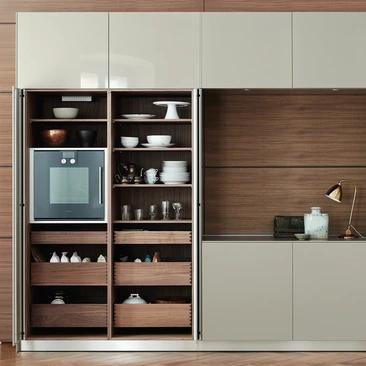
Pantries, breakfast cupboards and utility spaces allow us to make a distinction between the parts of a kitchen that deserve to be seen and those that don’t. Even something as simple as positioning the sink away from the main sightline can make a considerable difference.
82% of homeowners renovating their kitchen are incorporating specialist built-in features, according to the 2026 UK Houzz Kitchen Trends Study.
Open when you want it. Closed when you need it.
The value of a broken-plan arrangement often becomes apparent when two things need to happen at the same time.
Glazed doors between a kitchen and snug might remain open for most of the day, but they can be closed when someone wants quiet. A dining area can remain connected to the kitchen and become a useful workspace for an hour when required.
The architecture hasn’t changed. The way the house can be used has.
When open-plan is still the right answer
There are plenty of homes where we wouldn’t introduce more separation.
A well-proportioned kitchen and dining space with good acoustics, concealed storage and plenty of natural light may work beautifully as one room. Opening an enclosed kitchen can also transform the relationship between the centre of a house and its garden.
Broken-plan shouldn’t become another rule to follow. If an open space works for the house and for the people living in it, there is little reason to divide it simply because fashions have changed.
Before deciding how open your kitchen should be…
8 slides
Before deciding how open your kitchen should be…
So, is broken-plan the new open-plan?
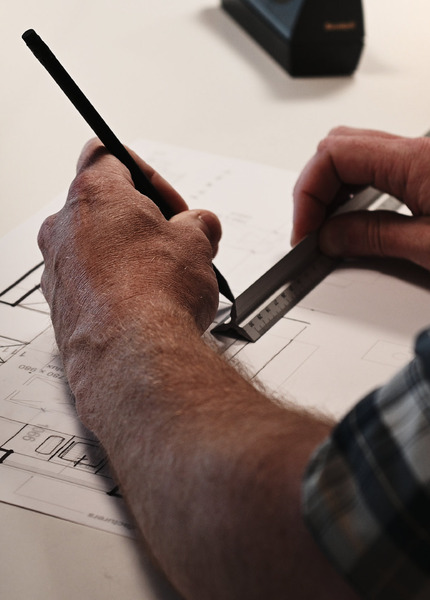
Perhaps. But the more useful conversation is about finding the right degree of openness for the way you live. We still value the light, space and sociability that made open-plan so successful. Broken-plan simply gives us more ways to control where that openness begins and ends.
A good plan leaves room for both.
A good plan leaves room for both.
Other Articles
View All Articles
Guide
Kitchens
Our guide to planning a kitchen project – Part two
Guide
Kitchens
Our guide to planning a kitchen project – Part One
Article
Interiors
How to connect your rooms without a ‘Red Thread’?
Article
Interiors
Why are materials, not paint, becoming the new feature walls?
Article
Interiors
Why are we still fighting the light?
Article
Interiors