

Article
Kitchens
article
Is an Instant Boiling Hot Water Tap really worth the investment?
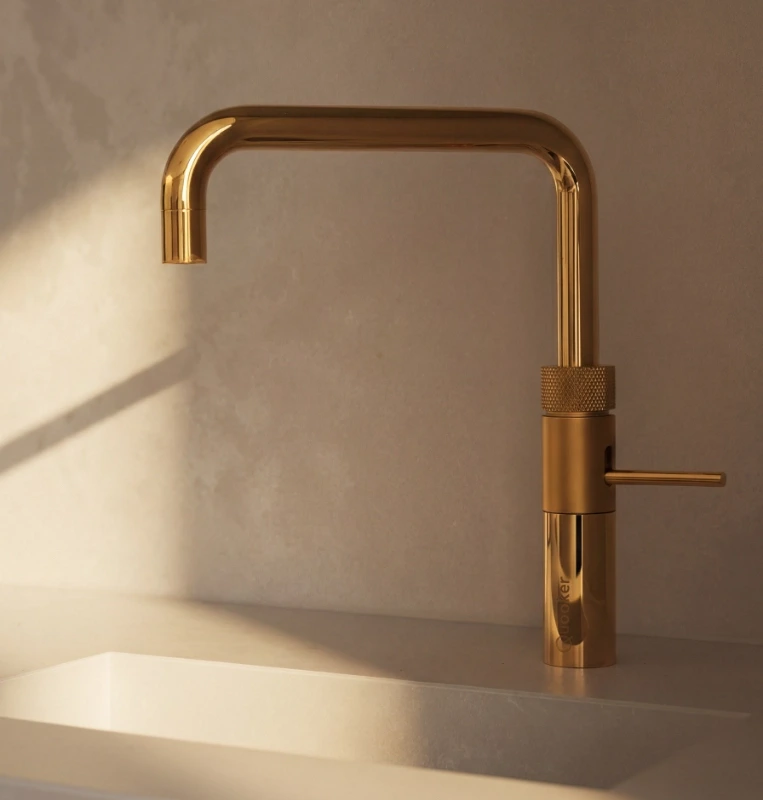
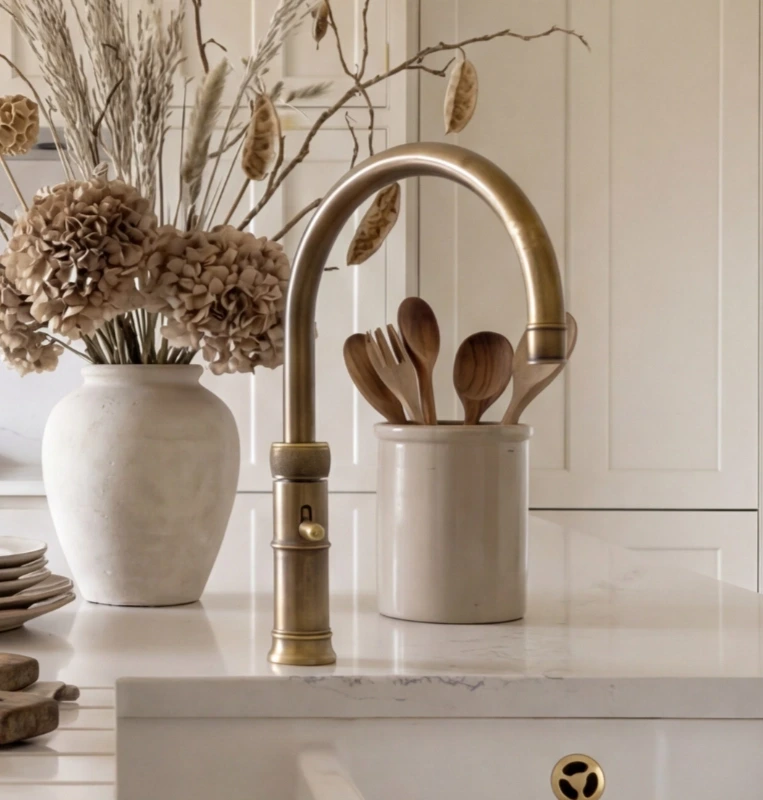
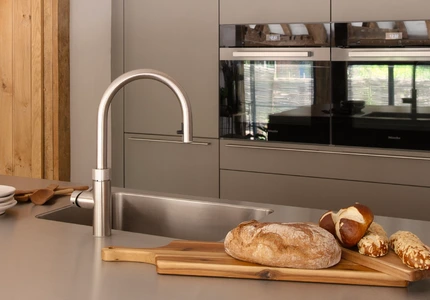
Understanding if a Quooker, or any other brand of Instant Boiling Hot Water Tap, is suitable for you and worth the investment comes down to a number of factors. Like many things in life that could be classed as a luxury, your perception of its value is highly personal and tied to your individual needs and desires.
This article will explore the benefits, costs, and considerations of owning and maintaining an instant boiling water tap in your home – whether you are creating a new kitchen or considering an upgrade to your existing space.
Why Choose an Instant Boiling-Hot Water Tap?
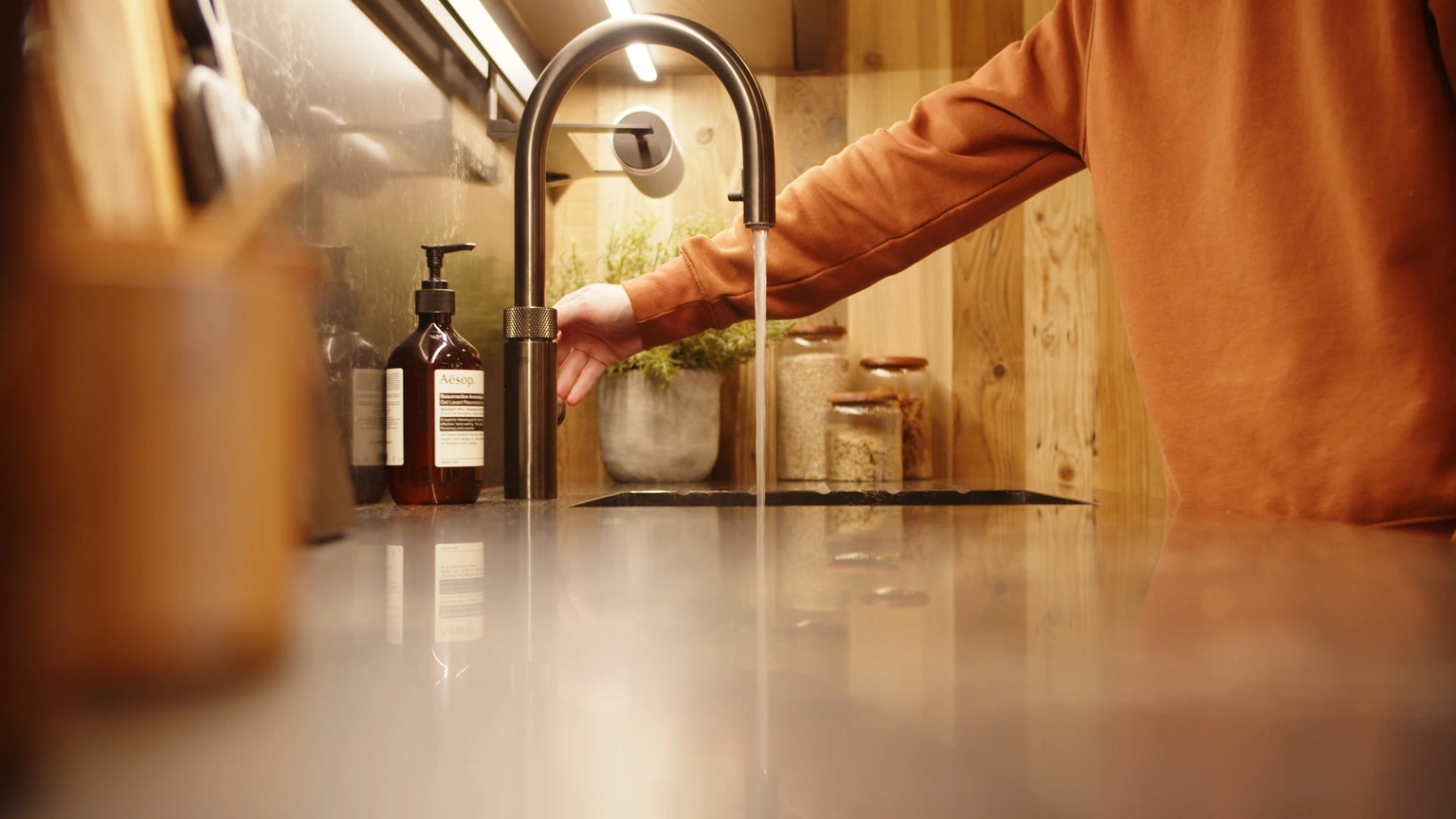
The answer is quite simple: convenience.
‘How much better will my life be when I don’t have to fill and boil the kettle every time I want to make a cup of tea or fill a saucepan? Think of the time I will save. The hot water will be ready to pour the moment I want it.’
Quooker claims that humans waste over 4 months of their lives simply waiting for a kettle to boil! If this is you, then the appliance’s key function perfectly solves your problem, and the monetary investment will be rewarded with endless satisfaction. Your kettle will become obsolete, and your cooking workflow will be more efficient.
The taps continue to evolve, adding a growing number of features that further enhance the proposition’s value. Sparkling water and chilled-filtered water are two such examples of extended functionality, combining features once associated with large-scale fridge-freezers or separate appliances altogether.
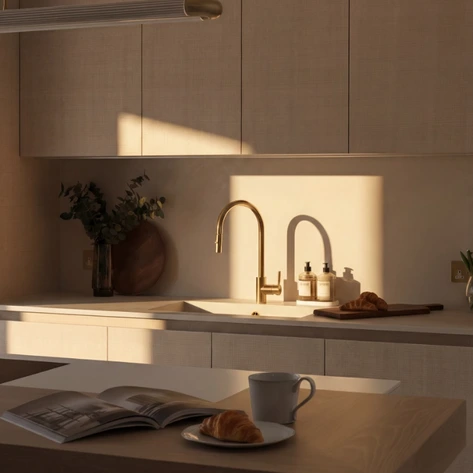
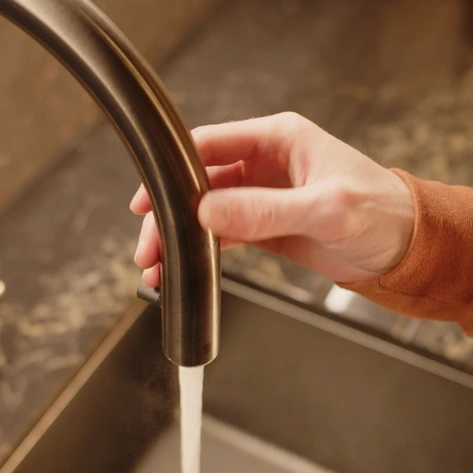
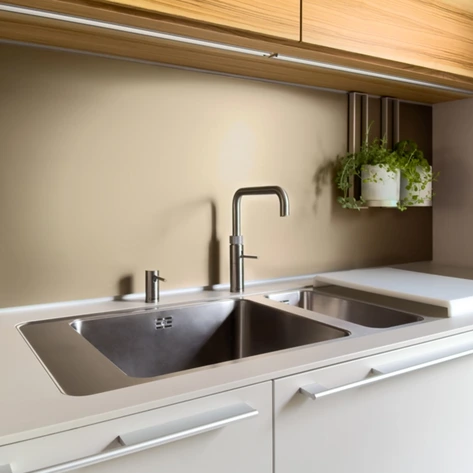
The Bottom Line
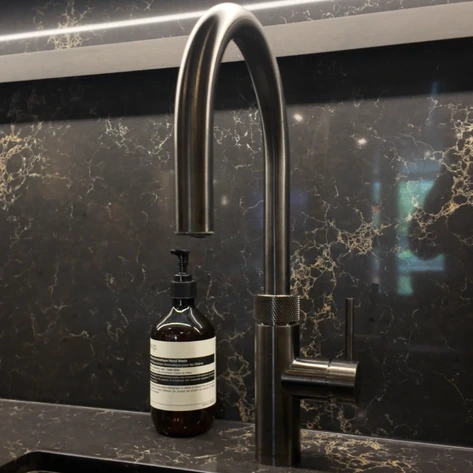
A Quooker tap has ongoing costs, but they are generally modest when viewed in the context of a premium kitchen appliance.
The main costs to consider are:
- Standby electricity use
- Energy used to reheat dispensed boiling water
- Filter replacement
- Limescale control in hard water areas
- Occasional servicing
- Space required beneath the sink
A Quooker is unlikely to pay for itself through energy savings alone. Its value comes from convenience, safety, design, speed and the way it improves everyday kitchen use.
For households or offices that regularly use boiling water, it can quickly become one of the most appreciated appliances in the space. For occasional use, the decision is less about financial return and more about whether the convenience and clean design justify the investment.
What prevents everyone from upgrading?
Is a Boiling Water Tap Right for Your Home?
Yet they remain a product that many homeowners are uncertain about. While the convenience is easy to understand, questions around cost, safety, practicality, and daily use often influence the decision.
Understanding these considerations can help determine whether the benefits align with your lifestyle and kitchen design
Upfront Cost vs Long-Term Value
The high entry price point and installation requirement of the system, over £1000, are likely key reasons that prevent some from ownership, even more so if the tap is an upgrade to an existing kitchen.
For those creating a new kitchen, the cost of the appliance, as a percentage of the overall kitchen spend or relative to other luxury elements, may increase or decrease the perceived value of ownership.
Like other kitchen appliances and white goods in general, we tend to change them only when they break or we notice a drop in performance. We rarely decide to upgrade a fully functioning washing machine. Because you don’t face a critical need to add a boiling water tap to your home, the high entry cost may feel like an even greater barrier.
Safety
Concerns relating to the safety of a hot water tap and children are understandable. The appliance is accessible and appears as a standard tap. However, according to figures released for National Burns Awareness Day in 2018, there are 3000 serious scalds to children every single year from kettles and kettle-related incidents. As such, users’ and children’s safety have been at the forefront of manufacturers’ designs since the appliance was conceived.
A Quooker product has several safety features that protect users in comparison to using a standard kettle:
1. Aerated water flow. The stream of boiling water that leaves the tap is formed of many droplets of water and air. While running boiling water onto bare skin would cause the user to pull their hand back, it isn’t likely to cause an instant scald – unlike the solid stream of water from a kettle.
Safety Features and Peace of Mind
Modern boiling water taps incorporate several features designed to improve safety:
- Aerated boiling water flow reduces the water stream’s intensity compared to pouring directly from a kettle.
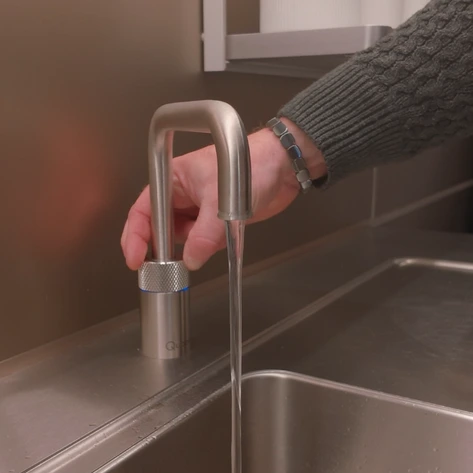
- Double push-and-turn activation helps prevent accidental operation.
- Visual warning indicators alert users when boiling water is being dispensed.
- Insulated spouts remain cool to the touch during use.
- Separate internal water channels prevent residual boiling water from mixing with standard hot and cold supplies.
- Fixed installation removes the risk of kettles being knocked over or pulled from worktops.
For many households, these measures mean that a boiling-water tap can offer safety advantages over a traditional kettle.
Storage Space and Kitchen Layout
There are physical storage-space implications to consider. The pressurised tanks and filter units that hold the water in readiness have to be located near the sink. This can reduce available storage space or require changes to the furniture to accommodate plumbing and electrical routes.
This requirement is offset by an increase in usable worktop space, which would have been previously taken up by the kettle.
When designing a new kitchen, this is easier to overcome, but it may not be straightforward in an existing one.
Adapting to a New Way of Using Hot Water
Lastly, introducing a hot water tap is a fundamental change to your established workflow. Whenever we are required to adapt to a new way of doing things, it can seem daunting at first and cast doubt in our minds. What if I can’t use it? What if I don’t like it?
At a Glance
Benefits
- Instant boiling water
- Frees up worktop space
- Reduces visual clutter
- Integrated safety features
- Convenient for cooking and hot drinks
- Enhances contemporary kitchen design
Considerations
- Higher upfront cost
- Requires under-sink space
- Professional installation required
- Adjustment to existing routines
- More easily accommodated within a new kitchen than a retrofit project
Other Articles
View All Articles
Guide
Kitchens
Our guide to planning a kitchen project – Part two
Guide
Kitchens
Our guide to planning a kitchen project – Part One
Article
Interiors
How to connect your rooms without a ‘Red Thread’?
Article
Interiors
Why are materials, not paint, becoming the new feature walls?

Article
Interiors
Why are we still fighting the light?
Article
Interiors