




Article
Kitchens
Learning Hub Article
Which Kitchen Extractor Fan is Best for my Project?
The best kitchen extractor depends on your kitchen layout, the position of your hob and your property’s ventilation requirements. Ceiling-mounted, downdraft and traditional cooker hood systems each offer different advantages. Choosing the right solution early in the kitchen design process helps balance effective extraction with the overall design.
Up, down, or round and round?
Traditionally, this task was the job of an overhead cooker hood, positioned against an external wall and expelling the air directly outside through a vent. Gradually, internal activated charcoal cleaning filters improved, capturing and purifying more of the air, negating the need to send it outside. Thus, the recirculating extractor was born, and new shapes and design opportunities were made possible.
For a long time, an overhead cooker hood was the most effective way to clear the air above the hob. Appliance manufacturers, including Gaggenau, Sub-Zero Wolf and Miele, developed downdraft extractors that rose up from the worktop. These monolithic extractors looked impressive but proved costly and consumed valuable storage space compared to their overhead counterparts.
How extractor design has changed
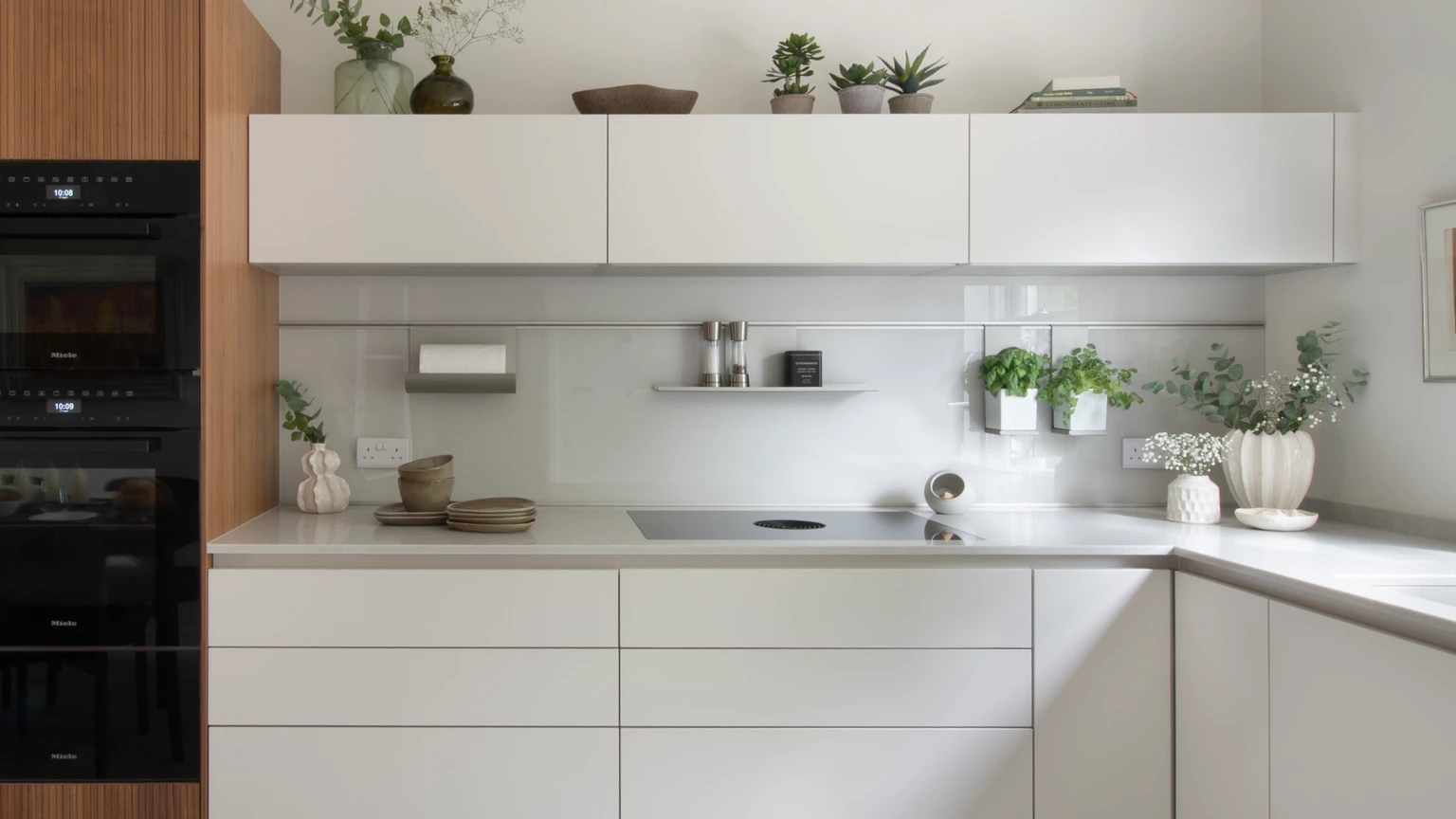
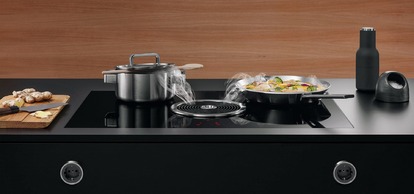
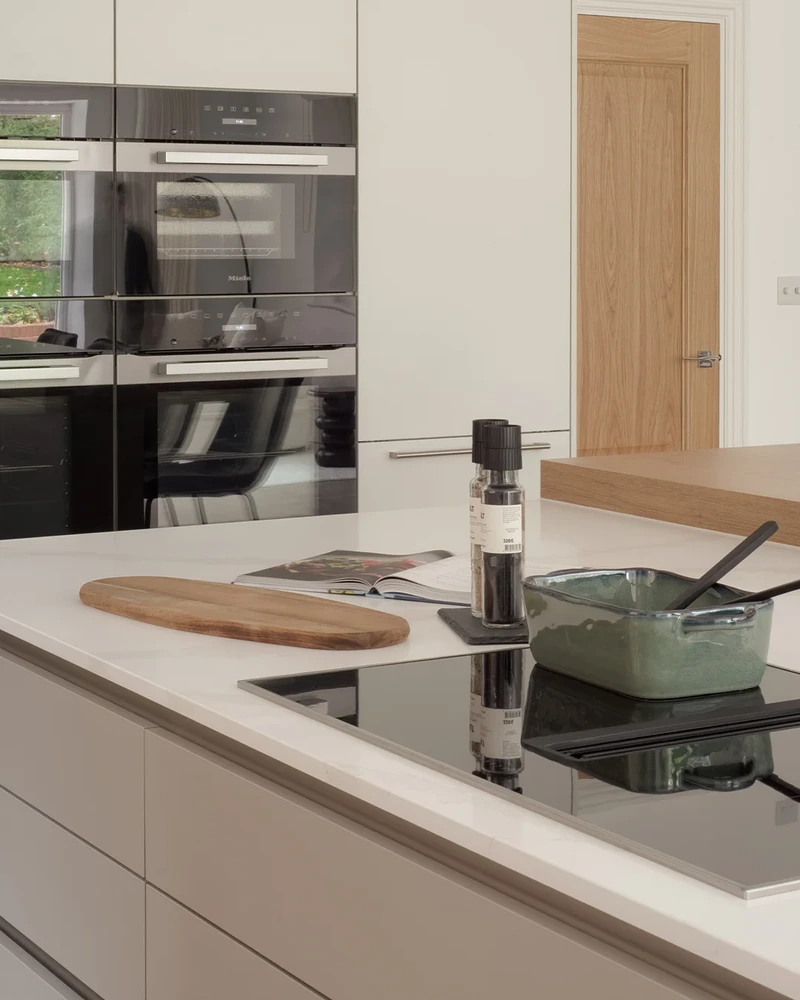
Overhead cooker hoods remain a reliable option, but extractor designs now include rising downdrafts, modular worktop systems, and induction hobs with integrated extraction.
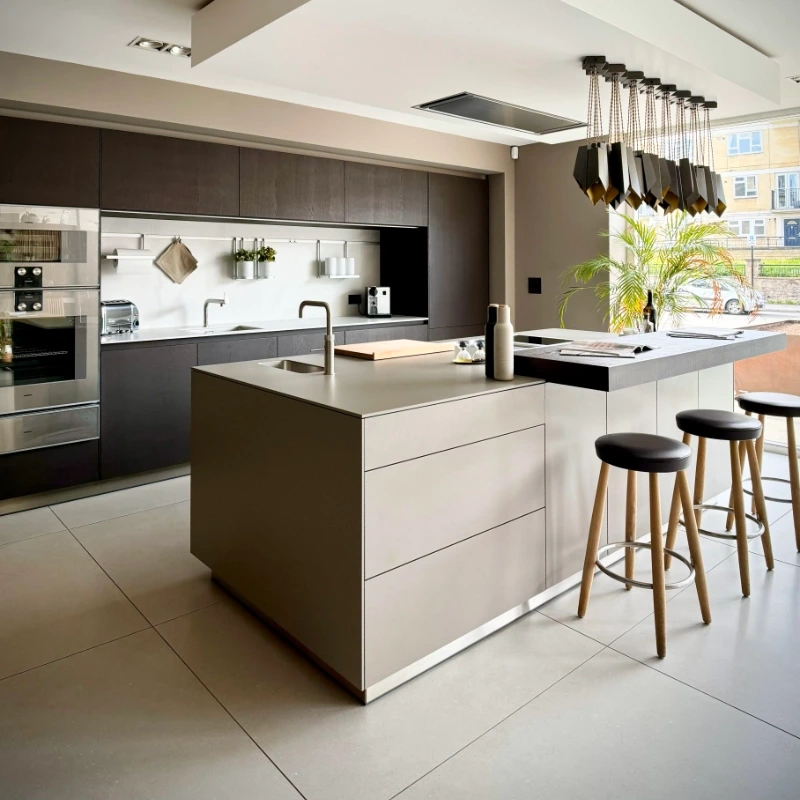
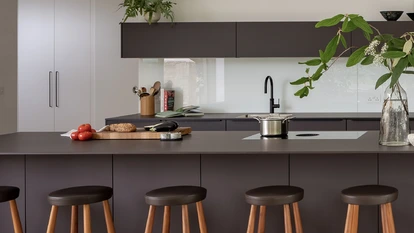
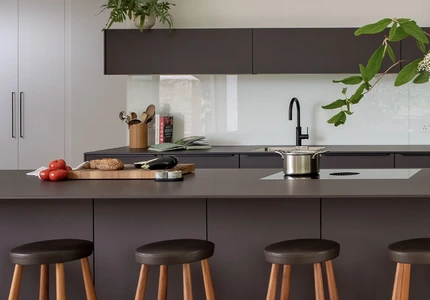
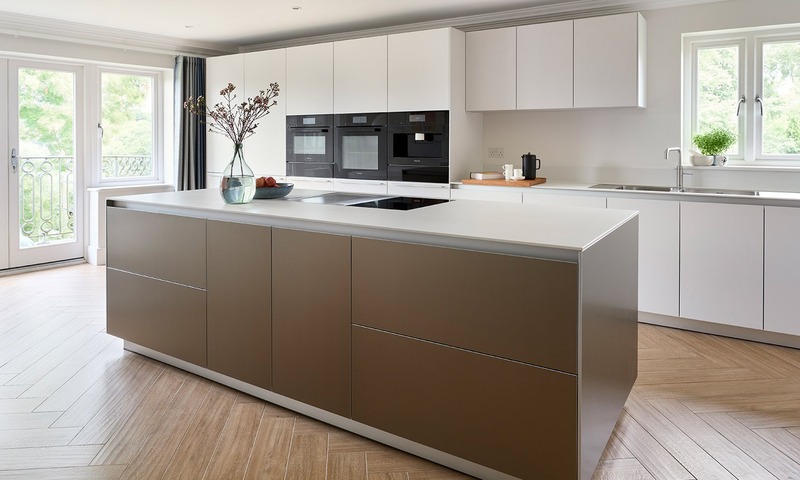
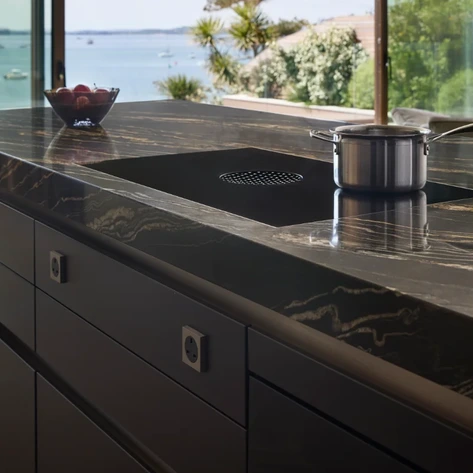
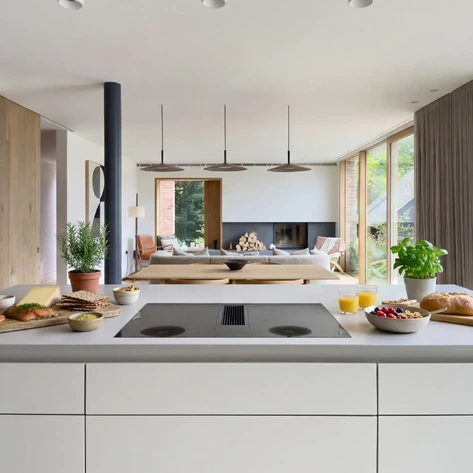
Current examples range from the BORA X Pure PUXA2 and PUXU2 integrated cooktop extractors to the Gaggenau VL 414 115 modular downdraft. These systems can keep walls and ceilings visually clear, but they require space below the worktop for the motor, filters or ducting.
Drawer depth, cabinet storage, service access, and the route for discharged or recirculated air should therefore be addressed at the outset of kitchen design.
BORA currently identifies PUXA2 as its exhaust-air X Pure model and PUXU2 as the recirculating version. Gaggenau’s VL 414 115 is a current motorless modular downdraft designed to work with a separate remote fan unit.
When working on new-build projects, we often tend to specify a recirculating extractor with an MVHR. This is a more environmentally friendly option because, rather than venting all the heated air in your house outside (which then needs to be replenished and reheated), a recirculating system keeps that heated air and sends it back into the room.
New-build homes are generally more airtight, so an externally ducted extractor should be coordinated with the property’s wider ventilation and replacement-air strategy. Older homes may have greater natural air leakage, but their ventilation requirements should still be assessed rather than assumed.
The appropriate solution depends on the extractor’s airflow, the property’s ventilation system, the presence of any combustion appliances and the overall building design. These points should be resolved with the relevant kitchen, ventilation and construction professionals before the appliance is specified.


What is the Volume of your Kitchen Space?
Guidance suggests that a kitchen extractor should be capable of refreshing the room’s air 10 times per hour. The size of this task is calculated by multiplying the room’s length, width, and height, then multiplying the result by 10. This gives you the cubic volume of air the extractor will move per hour (m³/h).
If you have a large open-plan space, you may wish to consider an extractor with a suitable capacity. The table shows the manufacturer-quoted figures for the extractors featured in this article. The figures quoted are for the highest normal setting, not the boosted setting, which you would be unlikely to run for extended periods.


External Wall
The most efficient way of positioning a ducted extractor is on an external wall because it minimises the distance the unwanted air must travel. However, being this definitive can adversely impact a design layout and conflict with the most favourable user experience. In some cases, it may be impossible to position an extractor on an exterior wall due to the space’s architecture.
When faced with this challenge, a recirculating wall-mounted extractor would be a suitable alternative and could be freely positioned.
Is your property listed or have any restrictions that would cause a problem installing ducting in the floor or ceiling?
In a listed property, there are often restrictions that can affect extraction opportunities; floors, walls, or ceilings may be protected by the listed status and may not be touched or altered. This may also be true in apartment buildings.
Before commencing, it is recommended that the parameters of any building are explored to ensure no issues arise later. It is expected that your designer would raise these questions as part of the design process.
Do you want to keep your ceiling and/or walls free from obstruction?
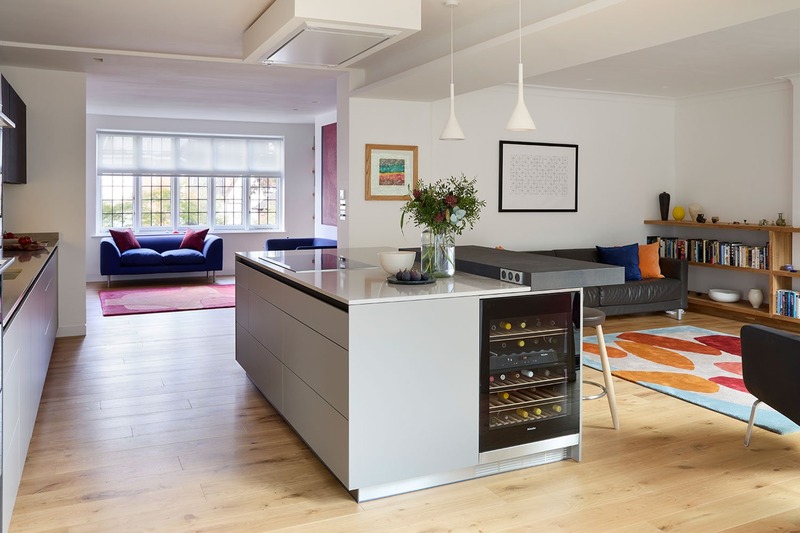
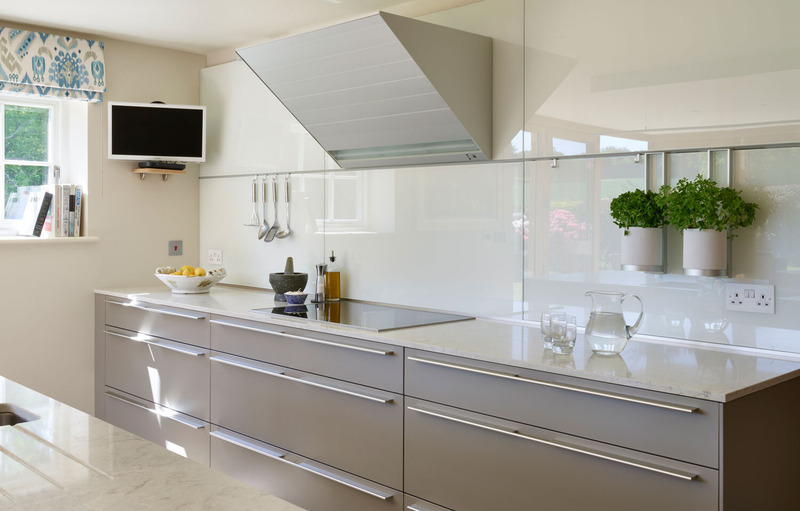
A wall- or island-mounted hood places the capture area relatively close to the cooking surface. It remains a visible part of the room, which may provide a deliberate focal point or may not suit a more visually restrained scheme. The selected hood must also be positioned at the manufacturer’s specified height and coordinated with the lighting, ceiling and sightlines through the room.
Cleaning and filter maintenance
All extractors require ongoing maintenance to ensure unwanted smells and odours are removed efficiently.
Grease filters need to be cleaned regularly to maintain airflow and odour removal. Appliances recommended by Hobson’s Choice would likely feature a metal grease filter allowing the units to be thoroughly washed in a dishwasher.
In a recirculating extractor, activated charcoal filters trap unwanted particles, cleaning the extracted air before it is returned to the room. The charcoal filters will need to be replaced by the owner at manufacturer-advised intervals.
In conclusion
In conclusion, the correct choice of ventilation for your kitchen project depends on your property, the design, and your individual style. There are many extractors to choose from, available in different shapes and colours, offering varying functionality across a range of price points.
When you work with us to design your next kitchen, our designers will help you filter the most suitable options into a smaller collection from which to choose your favourite. To learn more about our kitchen design services and the customer journey, click the button below.
Other Articles
View All Articles
Article
How to Plan a New Kitchen: A Complete Guide to Getting Started
Article
Interiors
How to connect your rooms without a ‘Red Thread’?
Article
Interiors
Why are materials, not paint, becoming the new feature walls?
Article
Interiors
Why are we still fighting the light?
Article
Interiors
Why are Architect’s Fearful of Bold Colour Palettes?

Article
Kitchens